EN
EN
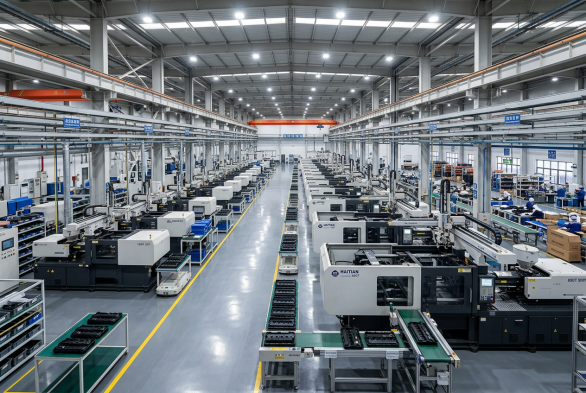
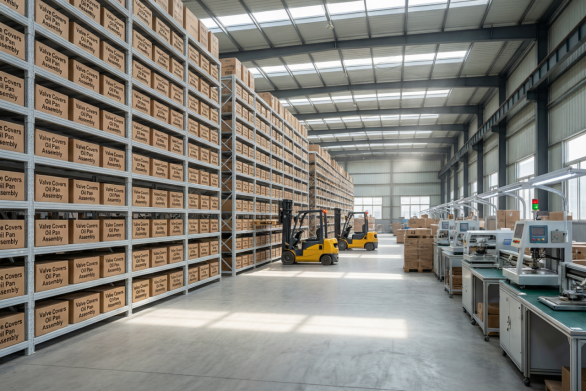
Quick Answer: China produces approximately 60% of global aftermarket plastic valve covers because of four structural advantages: (1) deep mold-making ecosystem in Zhejiang/Guangdong/Anhui, (2) integrated raw material supply (PA6/PA66 producers nearby), (3) decades of automotive OEM tier-1 experience that cascades to aftermarket, and (4) IATF 16949 certification at 800+ Chinese plants. No other country combines all four at scale. The trend is shifting toward inland provinces (Anhui, Hubei, Sichuan) as coastal labor costs rise.
The Four Structural Advantages
Advantage 1: The Mold Ecosystem
China's mold-making capacity is concentrated in three regions:
- Zhejiang (especially Wenzhou, Taizhou) — historical center for plastic injection molding
- Guangdong (Shenzhen, Dongguan) — electronics-driven precision molds
- Anhui (Hefei, Wuhu, Sixian) — newer hub catching the cost migration
A new valve cover mold can be designed and fabricated in 60–90 days at one-third the cost of equivalent tooling in Germany or Japan. This compresses NPI (new product introduction) cycle times for aftermarket producers.
Advantage 2: Material Supply
China is the world's largest producer of:
- PA6 (caprolactam → polyamide 6) — 50%+ of global capacity
- PA66 (adipic acid + HMD → polyamide 66) — 35%+ of global capacity
- Glass fiber for reinforcement — 65%+ of global capacity
Local sourcing shortens the supply chain by weeks vs imported feedstock. Ranmi sources PA6-GF30 from suppliers within 500 km of the Anhui factory.
Advantage 3: OEM Tier-1 Experience Cascade
China hosts assembly plants for nearly every major global OEM (VW, Toyota, Hyundai, GM, Ford, BMW, Mercedes-Benz). The Tier-1 suppliers serving these OEMs have built IATF 16949 capability. As former Tier-1 personnel move into aftermarket, that quality DNA cascades.
Anhui Runming's leadership team draws on this cascade — the founders relocated from Wenzhou (the Tier-1 ecosystem) to Anhui in 2024 specifically to scale aftermarket production with retained OEM-grade processes.
Advantage 4: Certification Capacity
Over 800 Chinese auto parts plants currently hold IATF 16949 certification (compared to ~250 in India, ~150 in Mexico, ~120 in Vietnam). Auditor availability and certifying body presence (BSI, SGS, TÜV all maintain dedicated China teams) make certification practical and affordable.
The Cost Migration Story
Coastal Chinese labor costs have risen 8–12% annually for the past decade. This drives manufacturers to relocate inland:
|
Period |
Coastal Avg Hourly Wage |
Inland Avg Hourly Wage |
|
2014 |
RMB 18 |
RMB 12 |
|
2019 |
RMB 28 |
RMB 18 |
|
2024 |
RMB 42 |
RMB 26 |
Anhui's wage advantage (~38% lower than Zhejiang) plus comparable infrastructure (high-speed rail, ports within 4–6 hours) makes it the natural destination for the next-generation Chinese manufacturing base. Anhui Runming's 2024 relocation from Wenzhou to Sixian, Anhui, captures this advantage.
Why Other Countries Are Not Catching Up Quickly
Vietnam, Thailand, Indonesia:
- Strong on assembly, weaker on plastic injection molding (limited mold ecosystem)
- Limited PA6/PA66 raw material — must import from China, Korea, or Taiwan
- IATF 16949 certified plant count rising but still <100 each
India:
- Strong domestic OEM base (Maruti, Tata, Mahindra)
- Mold-making capability concentrated in Pune, growing
- Aftermarket export still focused on filtration and electrical, less on engine sealing
Mexico:
- Strong NAFTA-driven OEM Tier-1 manufacturing
- Limited aftermarket export beyond North America
- Higher labor cost than China inland
Eastern Europe:
- Strong for European OEM aftermarket
- Limited cost competitiveness for Middle East/Africa/Latin America
- Smaller mold ecosystem
Implications for B2B Buyers
The practical takeaway:
- For premium aftermarket valve covers — China remains the most efficient single source globally, especially IATF 16949 plants in Anhui, Zhejiang, Jiangsu
- For risk diversification — keep one secondary source (Vietnam, Mexico, or Eastern Europe) for 10–20% of volume
- For new SKU introduction — China's NPI speed is unmatched; competitor regions add 60–90 days to mold lead time
FAQ
Q1: Are China-made valve covers really equivalent to OE quality? At IATF 16949 plants like Anhui Runming, yes. The same materials, same mold-making expertise, same quality systems. The price difference reflects labor cost arbitrage, not quality compromise.
Q2: Will tariffs erode China's advantage? US Section 301 tariffs add 25% on Chinese auto parts. This shifts marginal volume to other regions but does not erase the structural advantages. Most non-US markets (EU, Middle East, Africa, Latin America) have no equivalent tariffs.
Q3: How does Anhui specifically compare to Zhejiang for sourcing? Anhui offers ~15% lower FOB pricing than Zhejiang for equivalent quality. Slightly longer inland transport to Shanghai port (4–6 hours), but offset by lower production cost. Net advantage to inland Anhui.