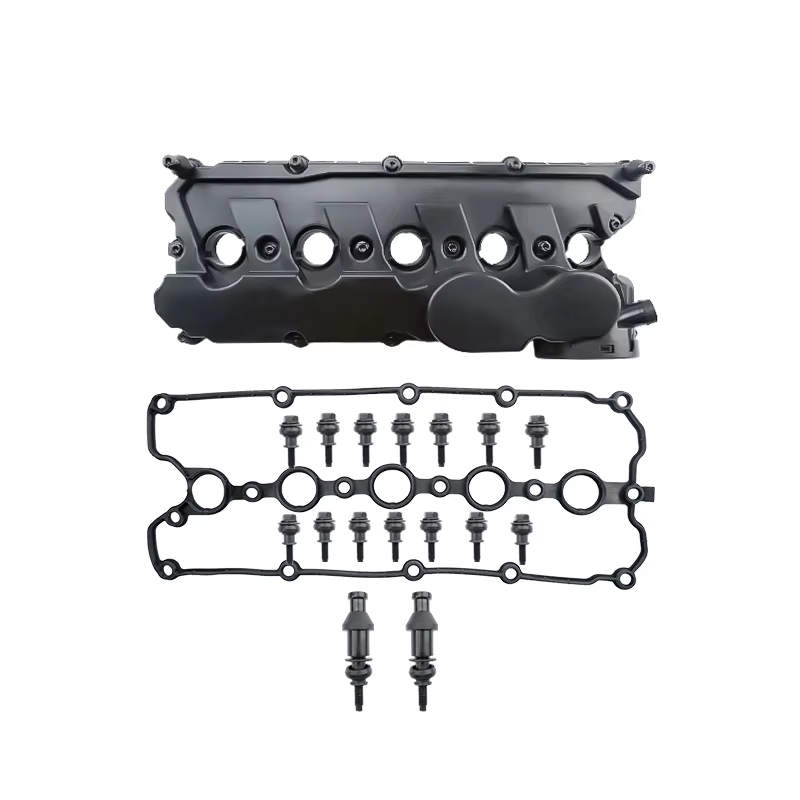
The engine rocker cover serves as the main barrier against oil leaks, which if left unchecked can lead to serious engine problems down the road. The material used provides thermal protection that keeps things running smoothly when stuck in traffic congestion, cutting down on component warping from excessive heat by around 22% according to recent industry data from 2024. Manufacturers have also built in sound absorbing materials that significantly reduce valve train noise levels, making for a quieter ride whether driving on freeways or navigating through busy city streets. All these features work together to make engines last longer. Studies show that good sealing practices can add approximately 30,000 extra miles before major repairs become necessary, especially important for vehicles regularly driven in stop start urban conditions where stress on mechanical parts tends to accumulate faster.
Gasket systems that are precision engineered create almost completely sealed barriers against environmental stuff that wears things down faster. Field tests on actual roads indicate these rocker covers stop around 98 percent of tiny particles smaller than 50 microns from getting through. This includes stuff like brake dust and those road salt crystals we see so much in winter months. The steel baffles coated with polymer materials help push moisture away from the valve springs area, which cuts down on corrosion problems. Coastal region mechanics report that about 17% of all valvetrain issues come from this kind of corrosion damage. An extra long overhang design also protects important parts from getting soaked directly when it rains heavily. Cars without this feature tend to break down more often at exactly these points during bad weather.
What materials go into making cars makes a big difference for everyday drivers when it comes to how well they perform, how long they last, and what kind of money pit they become over time. Reinforced plastics can cut down on weight by around 30 to maybe even 50 percent compared to aluminum, which means better gas mileage too. We're talking roughly 1 to 2 percent improvement for people stuck in city traffic most days. But there's something else worth mentioning here. Aluminum holds up better with temperature changes because it expands at a much steadier rate (about 23 micrometers per meter per degree Celsius). Plastics expand differently depending on direction, sometimes up to 100 micrometers or more, so engineers need to design special gaskets just to handle this issue properly.
The way materials corrode is pretty different when we look at them side by side. Polymers can stand up to road salt and chemicals pretty well, but they start breaking down once temperatures stay above 150 degrees Celsius for long periods. Aluminum works differently it creates its own protective coating through oxidation, which is good news for most situations. However, there's still a problem when these materials sit in salty coastal areas where galvanic corrosion becomes an issue. Cost wise, polymers beat aluminum hands down, coming in at around 20 to 40 percent cheaper to manufacture. But don't discount aluminum just because of price. Its ability to maintain shape under stress means many fleet operators report their aluminum parts lasting well past 200,000 kilometers before needing replacement.
| Property | Aluminum | Reinforced Polymer |
|---|---|---|
| Weight | Higher (2.7 g/cm³) | Lower (1.2–1.4 g/cm³) |
| Thermal Expansion | 23 µm/m°C (stable) | 30–100+ µm/m°C (directional) |
| Corrosion | Oxide protection | Chemical resistance |
| Cost per Unit | 20–40% higher | Lower upfront cost |
Urban commuters benefit most from polymer’s weight savings and corrosion resilience; highway-focused drivers gain from aluminum’s long-term thermal reliability.
Looking at fleet maintenance records from last year, we see three main problems standing out: oil leaks account for about 37% of cases, followed by gasket issues at around 29%, and PCV system troubles making up roughly 18%. The constant heating and cooling cycles tend to make gaskets become hard and shrink over time. Meanwhile, all that bouncing around on roads wears down bolts at seal connections. When PCV valves get blocked, they create sudden pressure increases inside the engine. This happens a lot during those frustrating stop-start commutes, where the buildup of exhaust gases actually speeds up by nearly 30% compared to highway driving conditions. As a result, oil tends to seep through already weakened seals much more easily.
Watch for these telltale indicators:
Routine torque verification during oil changes prevents 63% of leakage failures in high-mileage vehicles, making it one of the most effective low-cost reliability measures.
Getting reliable performance over time means bringing together three key areas that all affect each other. Materials matter a lot because different metals expand at different rates when heated. Take aluminum versus cast iron for instance - aluminum actually grows almost twice as much during heating cycles according to those SAE J1455 tests. Then there's the sealing systems. The best ones use these layered steel gaskets with rubber beads built right in. These maintain their grip even when temperatures swing wildly back and forth. And let's not forget about vibrations. Manufacturers add ribs to structures and carefully design mounting points to soak up the noise from valves working constantly. Real world testing shows these comprehensive approaches cut down on gasket failures by almost half compared to just bolting parts together without proper engineering in high mileage situations.
Serviceability is equally vital: covers engineered for gasket replacement without removing camshafts or timing components significantly extend service intervals—and reduce labor costs—without compromising sealing integrity.
Copyright © 2025 by Hangzhou Nansen Auto Parts Co.,Ltd. — Privacy Policy
 EN
EN