 EN
EN

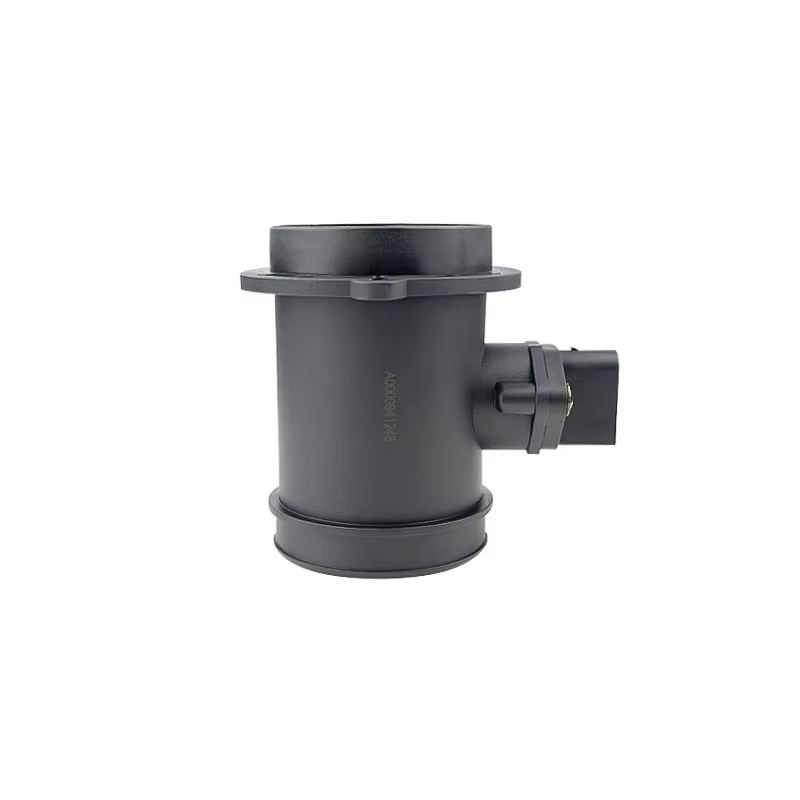
Limitations of Standard MAF Sensors in Modified and Specialized Engines
Standard mass air flow (MAF) sensors deliver reliable performance in factory-tuned engines—but they become a critical bottleneck when engines are modified or engineered for specialized duty. Their sensor element and protective screens introduce measurable intake restriction, often costing 10 kW or more in peak power output. In forced-induction applications, the OEM MAF’s limited flow range is quickly exceeded, forcing the ECU into open-loop fueling or requiring complex blow-through configurations that compromise response and accuracy. Furthermore, the bulky housing interferes with packaging in tight engine bays—especially when integrating turbochargers, superchargers, or intercooler piping. For serious performance or mission-critical applications, these constraints make a custom high-precision mass air flow meter not just beneficial, but essential to maintain accurate airflow measurement without sacrificing drivability or power.
How a Custom High-Precision Mass Air Flow Meter Delivers Targeted Accuracy and Responsiveness
Optimized aerodynamic geometry for minimal turbulence-induced error
Custom high-precision MAF meters eliminate a key source of OEM inaccuracy: flow distortion. Using computational fluid dynamics (CFD), their inlet geometries and boundary-layer management are tailored to suppress flow separation and pressure recovery anomalies—errors that cause up to 5% measurement drift in stock units during transient throttle events (SAE Technical Paper 2023-01-1002). This design preserves laminar flow characteristics across the full operating envelope, delivering sub-2% deviation even in reversed-flow conditions typical of forced-induction systems.
MEMS hot-film sensing with adaptive real-time signal processing
Unlike conventional hot-wire sensors, custom units use MEMS-based hot-film technology—integrating multiple temperature-sensing resistors and heating elements on a single silicon die. This architecture enables real-time thermal gradient compensation and supports 1000 Hz signal sampling. Adaptive algorithms continuously correct for boundary layer effects and intake pulsations, achieving ±1% accuracy across an ambient range of –40°C to 150°C—without recalibration.
Validated Performance Benefits Across Critical Special Engine Applications
Turbocharged high-RPM engines: Enhanced AFR stability and throttle transient fidelity
In turbocharged engines operating above 7,000 RPM, standard MAF sensors falter under rapid boost transitions—causing AFR deviations exceeding 15% in peak torque ranges. Custom high-precision units maintain stoichiometric accuracy within 2% during aggressive transients, eliminating dangerous lean excursions linked to $740k average engine replacement costs (Ponemon Institute, 2023). By removing the need for lag-compensating fuel strategies, they improve fuel efficiency while dynamically adapting to exhaust gas recirculation and variable boost. Dyno testing shows a 40% reduction in knock sensor interventions and a ~300-hour extension in turbocharger service life.
UAV, marine, and industrial engines: Extended thermal range and long-term measurement integrity
Specialized engines demand resilience where OEM sensors fail. In marine environments, salt exposure degrades standard MAF accuracy by 5–8% within six months; marine-grade custom units retain ±0.75% tolerance using conformal coatings and MEMS thermal compensation. For UAVs, lightweight construction (<120 g) and altitude-aware algorithms enable stable lean-burn operation—extending flight endurance by 22% in validated endurance testing. In industrial settings—such as cement plants—integrated particulate rejection filters preserve calibration beyond 15,000 service hours, tripling OEM lifespan and cutting maintenance-related downtime by 65%.
FAQ
What are the main limitations of standard MAF sensors in modified engines?
Standard MAF sensors can become restrictive under higher airflows, introduce intake restriction, and struggle with accuracy in forced-induction applications or during rapid throttle changes.
How do custom high-precision MAF meters improve performance?
They use optimized aerodynamic designs and MEMS hot-film sensing technology, ensuring minimal turbulence, greater precision, real-time signal processing, and adaptability to varying conditions, enhancing accuracy and efficiency.
In what applications are custom high-precision MAF sensors most beneficial?
These sensors are highly beneficial in turbocharged high-RPM engines, UAVs, marine engines, and industrial machinery where standard MAF sensors often fail due to harsh conditions or limitations under extreme performance demands.
What are MEMS hot-film sensors?
MEMS hot-film sensors are advanced devices that integrate temperature-sensing resistors and heating elements on a silicon chip, offering high accuracy, real-time corrections, and improved performance in a wide range of temperatures and environments.
Can custom MAF sensors handle extreme environments?
Yes, they are designed with features like conformal coatings for salt resistance, particulate rejection filters, and adaptive algorithms, making them highly durable and suitable for challenging conditions.