 EN
EN

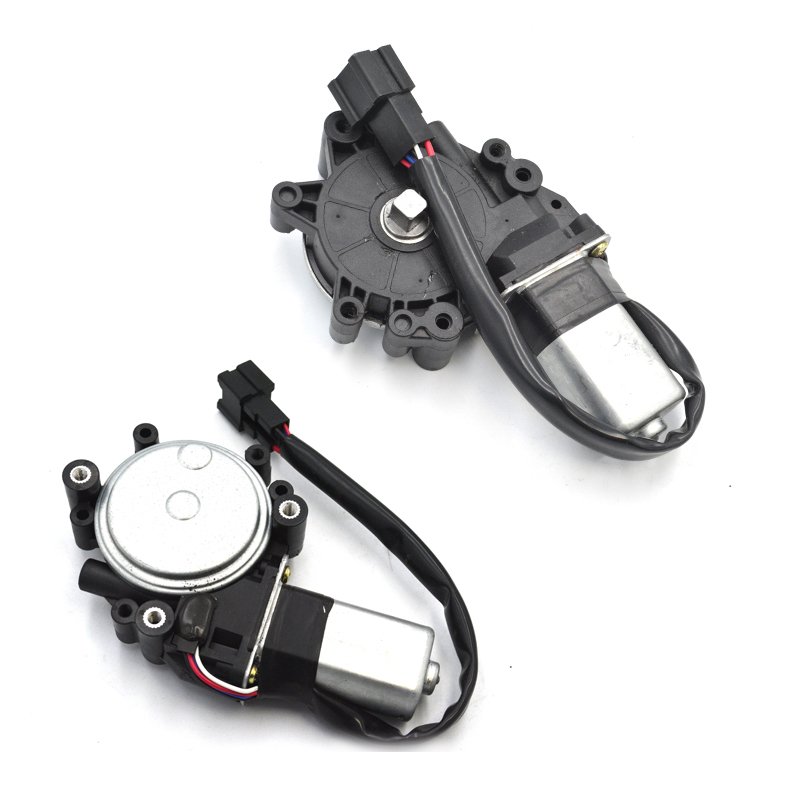
Verify Regulatory Compliance and Quality Certification
Confirming Valid ISO 9001 and IATF 16949 Certification for Automotive-Specific Quality Management
Valid ISO 9001 and IATF 16949 certifications are non-negotiable for automotive window regulator motor suppliers. These standards mandate rigorous process controls across design, production, and supplier management—especially for defect prevention and continuous improvement. To verify authenticity:
- Cross-check certification numbers against accredited registrar databases (e.g., IAOB’s official registry)
- Review most recent audit reports for unresolved non-conformities
- Confirm active status—avoid partners with lapsed certifications or inconsistent documentation
Facilities fully implementing IATF 16949 demonstrate measurable quality gains: 40% fewer defects in initial production runs, per peer-reviewed OEM benchmarking data.
Assessing Real-World Adherence to Safety Standards (UN ECE R100, FMVSS 118)
Certification is only the starting point. Operational compliance with UN ECE R100 (electrical safety) and FMVSS 118 (power-operated window systems) must be validated through tangible evidence:
- Third-party test reports from accredited labs (e.g., TÜV SÜD) covering dielectric strength, thermal endurance, and pinch protection
- Production line audits, confirming automated calibration of safety cut-off thresholds
- Historical failure mode analysis, particularly for obstruction detection reliability across temperature extremes (−40°C to +85°C)
Leading suppliers conduct quarterly dielectric strength testing per UN ECE R100 Article 6.2 (500V AC withstand), and validate FMVSS 118 reverse-sensitivity activation at ¤200N obstruction force—both under real-world load and environmental stress.
Evaluate Technical Capability and Production Maturity
Comparing Motor Technology Depth: Brushed DC, Brushless DC, and LIN Bus-Enabled Smart Solutions
Technology maturity—not just variety—determines long-term performance. Prioritize manufacturers with proven depth across architectures:
- Brushed DC: Cost-effective for entry-level applications but limited to ~15,000 cycles; 15—20% shorter lifespan than brushless alternatives (SAE 2024 Efficiency Report)
- Brushless DC (BLDC): Delivers 30% lower energy consumption and 25% higher torque density—critical for heavy-duty or EV platforms
- LIN Bus-enabled smart motors: Integrate position feedback with <150ms response times, enabling certified anti-pinch functionality and over-the-air diagnostics
All three require validation at Technology Readiness Level (TRL) 7+: lab-certified fatigue testing beyond 20,000 cycles, including thermal cycling and voltage fluctuation stress.
Auditing Vertical Integration: In-House Winding, Injection Molding, and End-of-Line Testing Capacity
True production maturity hinges on controlled, in-house execution—not just outsourcing. Top-tier suppliers maintain:
- Precision winding: ±0.5% coil symmetry via tension-controlled automation
- Injection molding: 99.8% cavity pressure consistency for gear housings, ensuring dimensional stability
- 100% end-of-line NVH testing: Under dynamic load simulations replicating real-world vehicle conditions
A 2023 OEM benchmarking study found full vertical integration reduced warranty claims by 40% versus partially outsourced models. APQP documentation must include:
- SPC charts for critical dimensions (e.g., commutator runout, gear tooth profile)
- Torque consistency within 0.1 Nm tolerance across batches
- Salt spray corrosion resistance ¥500 hours (ISO 9227)
Align Collaboration Model with Your Business Needs
OEM-Ready Partnerships: APQP, PPAP, and Tier-1 Integration Capabilities
OEM integration demands more than capability—it requires proven process discipline. Prioritize suppliers with documented APQP execution and PPAP submissions accepted by major automakers. This includes:
- FMEA documentation with mitigation plans for high-risk failure modes (e.g., stalling under low-voltage conditions)
- SPC data demonstrating stable control of torque, current draw, and response time
- Change control logs showing traceability from design intent to production release
IATF 16949-certified Tier-1 suppliers consistently reduce production defects by 35% and accelerate time-to-market, according to 2023 automotive quality benchmarks.
Aftermarket Agility: Customization Speed, MOQ Flexibility, and Regional Support Infrastructure
Aftermarket success depends on responsiveness—not scale. Evaluate:
- Rapid prototyping: Top performers deliver functional design iterations within 72 hours, supported by digital twin simulation
- MOQ flexibility: Suppliers accommodating orders below 500 units without premium pricing signal true aftermarket focus
- Regional warehousing: Local inventory networks cut lead times by up to 60% versus centralized distribution—critical for urgent replacement demand
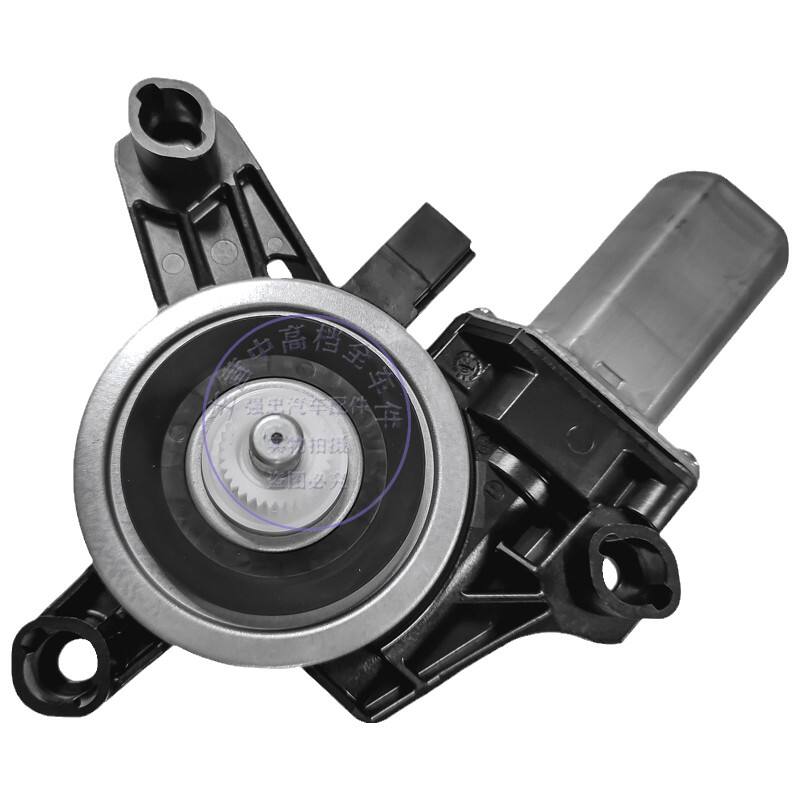
Validate Reputation and Long-Term Reliability Through Evidence
Credibility is earned through verifiable, long-term performance—not marketing claims. Request:
- Documented case studies of 10+ year OEM partnerships—including harsh-environment validation (e.g., desert heat cycling, coastal salt exposure)
- Third-party audit reports (e.g., VDA 6.3, AIAG CQI-17) cross-referenced with client testimonials
- Performance-backed recognition, such as inclusion in OEM-approved vendor lists with supporting defect metrics (e.g., ¤50 PPM field failures)
Manufacturers with independently verified reliability data achieve 40% higher client retention, per the 2023 Automotive Supplier Benchmark. Resilience through market shifts—evidenced by consistent delivery, capacity scalability, and engineering continuity—is the strongest indicator of operational maturity beyond compliance.