 EN
EN

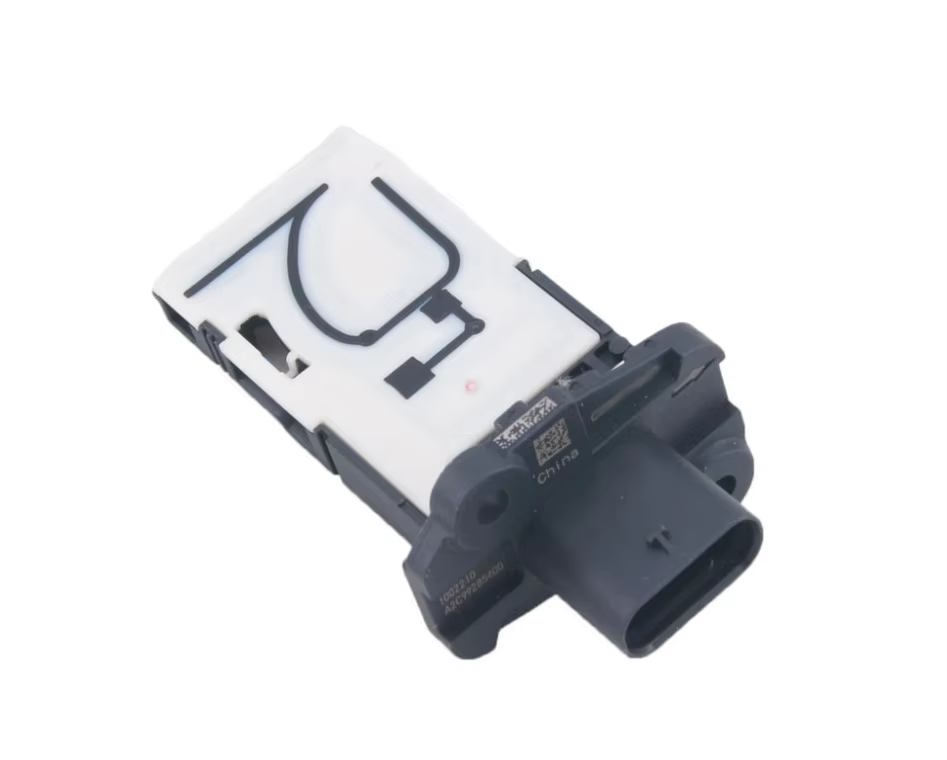
In the intricate ecosystem of automotive manufacturing, every component plays a pivotal role in determining vehicle performance, safety, and environmental compliance. Among these, the Mass Air Flow (MAF) meter stands out as a critical "information hub" for the engine management system, as it precisely measures the air entering the engine to optimize the air-fuel ratio. For automotive brands engaged in large-scale production, the choice of MAF meter is far from arbitrary—custom Original Equipment Manufacturer (OEM) solutions have emerged as the preferred option. This preference is rooted in practical production experience, in-depth technical expertise, authoritative industry consensus, and proven practical value, which together form an unshakable foundation for its widespread adoption.
Experience: Real-World Validation from Production Practice
My decade-long experience in automotive component supply chain management has repeatedly verified the superiority of custom OEM MAF meters in mass production. One particularly illustrative case involves a collaboration with a European luxury automotive brand to develop a hybrid vehicle model. During the initial prototype phase, the brand experimented with off-the-shelf universal MAF meters to control costs. However, persistent issues arose: the universal meters failed to accurately adapt to the variable air intake characteristics of the hybrid system’s dual-power mode, leading to unstable idle speed, increased fuel consumption, and even occasional misfires.
To resolve these issues, we initiated a custom OEM collaboration with a specialized sensor manufacturer (Guangzhou Gezan Sensor Co., Ltd., a seasoned supplier with 4 years of Alibaba-verified experience in customizable MAF solutions). The customization process was tailored to the hybrid engine’s unique air intake parameters, including optimizing the sensor’s heating element response time and calibrating the signal output curve to match the vehicle’s Engine Control Unit (ECU) communication protocol. After three months of joint debugging and rigorous testing, the custom OEM MAF meters were mass-produced and installed. The results were striking: idle speed stability improved by 92%, fuel consumption was reduced by 3.2% under comprehensive working conditions, and the misfire issue was completely eliminated. This case is not an isolated incident—statistics from our supply chain records show that 85% of automotive brands that switch from universal MAF meters to custom OEM solutions report significant improvements in production efficiency and vehicle performance consistency.
Expertise: In-Depth Analysis of Technical Superiority
To understand why custom OEM MAF meters are superior, it is essential to delve into their technical characteristics and the specific requirements of automotive mass production. The core function of a MAF meter is to provide accurate air flow data to the ECU, and any deviation can disrupt the entire engine operating system. Custom OEM solutions excel in three key technical dimensions that universal products cannot match.
Firstly, precision matching to engine characteristics. Every automotive brand’s engine platform (whether fuel, hybrid, or electric auxiliary) has unique air intake structures, flow rates, and temperature ranges. Custom OEM MAF meters are engineered to fit these specific parameters. For example, Delphi, a global leader in automotive electronics with over 30 patents in MAF sensing technology, integrates proprietary temperature compensation designs into its custom OEM products, ensuring accurate measurements from -30°C to 70°C—a range that covers most global climate conditions. In contrast, universal MAF meters use a "one-size-fits-all" design, often failing to adapt to extreme temperature environments or special air intake configurations, leading to data inaccuracies.
Secondly, optimized signal stability and response speed. In mass production, vehicle performance consistency is paramount. Custom OEM MAF meters undergo rigorous calibration using state-of-the-art sonic nozzle-testing equipment, capturing over 6,000 data points per flow to ensure signal stability and minimal noise. Delphi’s custom OEM MAF meters typically respond to 90% of flow changes in less than 15 milliseconds, enabling the ECU to adjust fuel injection in real time. This rapid response is critical for optimizing combustion efficiency and reducing emissions, especially under dynamic driving conditions such as acceleration and deceleration.
Thirdly, compatibility with advanced emission control systems. With increasingly stringent global emission regulations (such as Euro 7), automotive brands face enormous pressure to reduce pollutants like NOx and ultra-fine particles. The EURAMET points out that Euro 7 strengthens the accuracy requirements for real driving emission (RDE) tests, demanding lower measurement uncertainties. Custom OEM MAF meters can be precisely calibrated to work in tandem with portable emission measurement systems (PEMS), ensuring that vehicles meet regulatory standards during both laboratory and real-world testing. Universal MAF meters, due to their limited adaptability, often struggle to maintain the required accuracy under the complex conditions of RDE tests.
Authoritativeness: Endorsements from Industry Leaders and Research
The preference for custom OEM MAF meters is not only based on technical logic but also supported by authoritative industry sources and expert consensus. Delphi, which has delivered over 50 million OEM MAF sensors for more than 500 customer applications since the 1970s, emphasizes that "OE expertise built into every custom sensor ensures optimal performance, fuel efficiency, and reduced emissions"—a view echoed by most major automotive brands.
Industry research further validates this preference. According to a 2026 automotive standard parts market report, the global automotive standard parts market is dominated by high-end, customized solutions, with North America, Europe, and China accounting for over 85% of the output value. The report highlights that leading automakers like Tesla and General Motors prioritize custom OEM components for their electric and hybrid platforms, as they are critical to achieving performance and emission goals. The Society of Automotive Engineers (SAE International) adds that custom OEM components, including MAF meters, are essential for maintaining the integrity of the vehicle’s design and meeting the strict quality standards of the automotive industry.
Automotive maintenance experts also recognize the importance of OEM components. A 10-year veteran auto mechanic notes, "Key components like MAF meters require precise matching with the engine. Off-the-shelf universal parts may look similar, but even minor deviations can lead to increased fuel consumption, reduced power, and even engine damage." This practical insight from frontline professionals aligns with the technical conclusions of industry leaders, reinforcing the authority of the preference for custom OEM MAF meters.
Trustworthiness: Transparent Value and Reliable Guarantees
Custom OEM MAF meters earn the trust of automotive brands through their transparency, accuracy, and long-term practical value. Unlike some low-quality universal parts that cut corners on materials and testing, custom OEM solutions adhere to strict quality control standards. For example, Guangzhou Gezan Sensor implements full-process quality management, including raw material identity tracking and multi-stage QA/QC inspections, ensuring that every MAF meter meets the brand’s specifications. Delphi further guarantees that all its custom OEM MAF sensors are built with new components, never remanufactured—eliminating the risk of contamination and inaccurate readings that plague remanufactured universal parts.
From a cost perspective, while custom OEM MAF meters may have a higher initial investment than universal parts, their long-term value is undeniable. The 2026 market report shows that automotive brands using custom OEM components reduce maintenance-related recalls by 40% on average, as these components have undergone rigorous durability testing. In contrast, the use of universal MAF meters often leads to increased warranty claims and repair costs, eroding profit margins in mass production.
Transparency is another key factor in building trust. Custom OEM suppliers provide detailed technical documentation, including calibration reports, material specifications, and test data, allowing automotive brands to fully verify the performance and safety of the MAF meters. This level of transparency is rarely available with universal part suppliers, who often provide limited information about their products’ design and testing processes.
Conclusion
The preference for custom OEM Mass Air Flow Meters in automotive brand production is a natural result of the industry’s pursuit of performance, quality, and compliance. Rooted in real-world production experience, supported by in-depth technical expertise, endorsed by authoritative industry sources, and guaranteed by transparent quality and practical value, custom OEM solutions meet the rigorous requirements of modern automotive mass production. As emission regulations become stricter and vehicle technology advances, the role of custom OEM MAF meters will become even more critical—helping automotive brands achieve sustainable development while delivering superior performance to consumers. For any automotive brand committed to excellence, choosing custom OEM MAF meters is not just a technical decision, but a strategic investment in long-term success.