 EN
EN

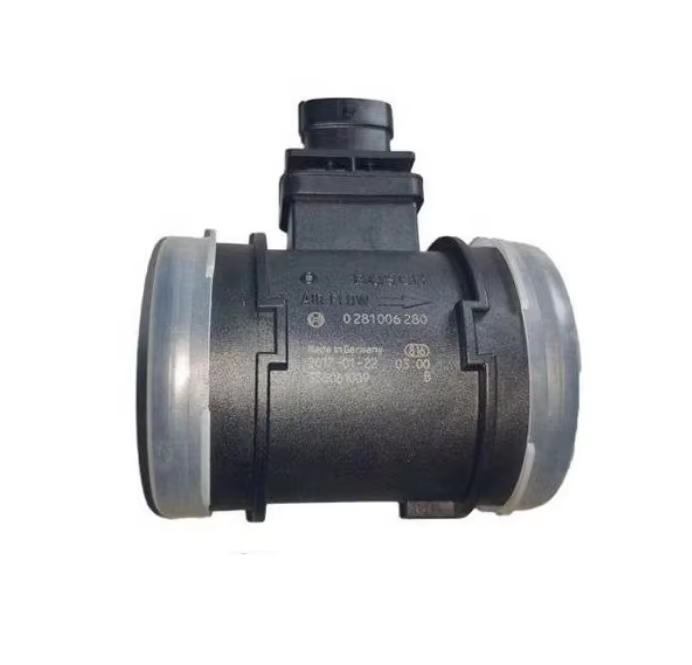
Digital Mass Air Flow Meter Fundamentals: Architecture, Output Types, and Signal Integrity
Hot-wire vs. hot-film sensing elements: precision, durability, and response time in modern digital MAF designs
Today's digital mass air flow meters typically come with either hot wire or hot film sensing technology, each designed for specific performance needs. The hot wire version uses thin platinum wires that can measure airflow with around 0.5% accuracy and respond to changes within just 10 milliseconds, making these great for capturing quick fluctuations in engine conditions. But there's a catch. Since these wires are exposed, they tend to get dirty pretty easily from things like oil particles, dust buildup, and whatever else gets sucked into the intake system. That's where hot film sensors shine. These have the heating element built right into a durable ceramic base, which means they resist dirt and grime about five times better than their hot wire counterparts. According to Automotive Diagnostics Quarterly last year, this actually cuts down on warranty claims related to sensor failures by nearly 93%. While they do take a bit longer to react (around 15 milliseconds instead), the sealed construction keeps them working reliably even when installed in the tough conditions found under most car hoods.
Frequency-based vs. voltage-based digital outputs: ECU compatibility, noise immunity, and resolution advantages
MAF sensors work digitally, sending airflow information either through frequency modulated square waves ranging from about 5 to 12 thousand hertz or via linear analog voltages between half a volt and five volts. Each method comes with its own pros and cons. The frequency based signals are better at resisting noise problems, particularly around things like spark plugs and alternators because they're digital and handle electromagnetic interference much better. That's why car manufacturers often go with this type when dealing with noisy environments inside vehicles. On the flip side, voltage outputs give just a little bit more detailed readings typically around one tenth of a percent accuracy which helps engines calculate loads more precisely when someone suddenly opens the throttle wide. These days most engine control units can actually read both kinds of signals thanks to smart processing software built into them. But watch out what happens if someone installs the wrong kind of sensor. Putting a voltage output MAF sensor into a system expecting frequency signals will almost certainly set off error code P0101 related to MAF circuit issues. This is exactly why mechanics always recommend sticking with original equipment manufacturer matched parts whenever possible.
Digital Mass Air Flow Meter in Engine Diagnostics: DTC Correlation and Latent Fault Detection
Decoding MAF-related DTCs (P0101–P0104): root causes, symptom patterns, and diagnostic hierarchy
The diagnostic trouble codes related to mass air flow sensors actually work according to pretty straightforward principles that connect directly to real world problems with the hardware. Code P0101 basically means the computer is seeing airflow numbers that don't make sense together. This usually happens when there's dirt buildup inside the sensor, scale forming on components, or some kind of vacuum leak before the sensor itself. Then we get to codes P0102 and P0103 which are about electrical problems in the system. P0102 generally means something like a broken wire or low voltage at the connection point, often because connectors have corroded over time or wires have snapped somewhere. On the flip side, code P0103 shows up when there's a short circuit or way too much voltage coming in, which can happen if insulation gets damaged or grounding issues develop. Lastly, code P0104 appears when the signal keeps cutting out now and then. Mechanics see this all the time with loose wiring harnesses, housing cracks letting moisture in, or worn out circuit paths inside the sensor unit.
Common symptoms align closely with these root causes: rough idling, hesitation under acceleration, unstable fuel trims exceeding ±15%, and a check engine light accompanied by misfire codes. A disciplined diagnostic hierarchy improves accuracy:
- Visual inspection for physical damage, debris, or oil residue on the sensing element
- Electrical testing—including reference voltage, ground integrity, and signal circuit resistance—against OEM specifications
- Comparative analysis with MAP sensor data to isolate airflow-specific anomalies
| DTC | Primary Cause | Common Symptoms |
|---|---|---|
| P0101 | Contamination or scaling | Stalling at low RPM |
| P0102 | Open circuit or low voltage | Rich condition (black smoke) |
| P0103 | Short circuit or high input | Lean condition (backfires) |
| P0104 | Intermittent signal loss | Erratic power delivery |
Using long-term/short-term fuel trims and live MAF g/s values to identify drift and contamination before DTCs set
Finding out when a Mass Air Flow sensor starts to fail isn't about waiting around for error messages to pop up. Instead, mechanics need to look at what's happening with fuel trim adjustments and actual air flow measurements in real time. When long term fuel trims (LTFT) stay above or below +/–10%, that usually means something's off with the calibration. This kind of drift typically happens because of dirt building up over time or electronic components getting old. Short term trims (STFT) bouncing around more than +/–8% while the engine runs at a constant speed points to problems with how quickly the system responds. Often this is caused by a thin layer forming on the sensor itself. The live grams per second readings from the MAF give technicians important clues about whether everything is working properly or if there might be an issue developing.
- 3–7 g/s at 700 RPM idle suggests an upstream vacuum leak or sensor under-reporting
- Below 150 g/s at 3000 RPM indicates significant airflow restriction
Looking at these numbers alongside what the oxygen sensors are telling us helps figure out if problems come from faulty MAF readings instead of something else like fuel delivery or exhaust issues. A recent study published by SAE in 2023 found that around two thirds of all confirmed MAF failures showed noticeable changes in trim settings about 14 days before the check engine light even came on, give or take three days. This means technicians who keep an eye on these early warning signs can catch problems way before they become serious, saving time and money in repairs down the road.
Real-Time Performance Monitoring via Digital Mass Air Flow Meter Data
Validating air-fuel ratio stability and closed-loop control responsiveness using MAF-derived airflow metrics
Getting accurate gram per second (g/s) airflow measurements from digital MAF sensors forms the basis for checking how well closed loop control systems are working. When the airflow numbers reported by the MAF match closely with what the oxygen sensors show plus the injector pulse widths being sent out, this basically tells us that combustion is happening properly and the ECU is adapting as it should. If there's a difference greater than plus or minus 5% in those short term fuel trim readings when accelerating or decelerating, or if there's a constant gap between what the system thinks it's sending versus what actually flows through, then something might be wrong. Either the sensor is getting dirty over time or there could be an electrical problem messing up real time adjustments. Looking at these details really matters because it helps fine tune combustion processes and cuts down on exhaust emissions anywhere from 12% to almost 18%, according to various recent tests on emission controls.
Interpreting MAF PID waveforms on scan tools: detecting response lag, hysteresis, and transient airflow anomalies
When working with professional scan tools, Parameter Identification (PID) waveforms turn basic MAF data into something useful for diagnosis, catching problems way before any check engine lights come on. What we call response lag shows up when there's a delay in how fast the signal rises after pressing the accelerator pedal. If this delay goes over about 100 milliseconds, it usually means something isn't quite right with how heat is moving through the system. Then there's hysteresis, which technicians look for by comparing what happens when accelerating versus decelerating. The curves just don't match up anymore if there's mechanical wear or maybe a calibration issue somewhere. Strange things happen too sometimes - wild spikes, signals that just stop changing, or weird wiggles in the pattern. These often point to problems like air leaks in the intake system, damaged parts inside the sensor, or electronic components starting to fail. Most techs compare their findings against manufacturer specs. Anything more than 0.5 volts off at idle time, or changes in frequency greater than 2 Hz around 2500 RPM typically mean trouble is brewing. According to recent industry reports from 2024, looking at these waveforms catches nearly nine out of ten potential MAF problems before they trigger warning codes. That makes this technique pretty much essential for anyone trying to diagnose drivability issues these days.