EN
EN
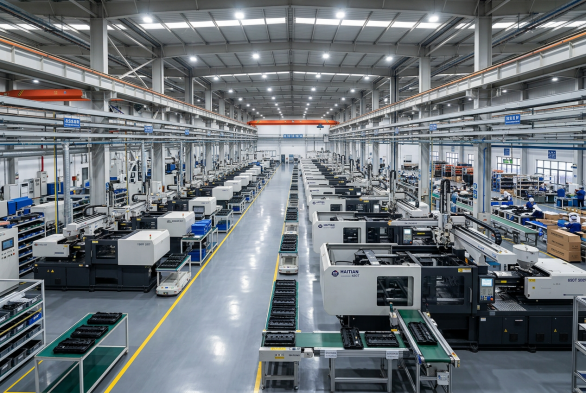
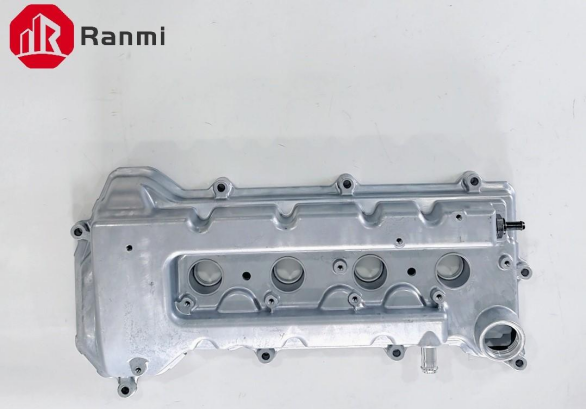
Γρήγορη Απάντηση: Η δύναμη σύσφιξης της μηχανής ενεσταλμένης μορφοποίησης κυμαίνεται περίπου από 130 τόνους (μικρά καλύμματα βαλβίδων τετρακύλινδρων κινητήρων) έως 650 τόνους (μεγάλα καλύμματα βαλβίδων V6/V8, ολοκληρωμένα συναρμολογήματα, δοχεία λαδιού) . Το απαιτούμενο τονάζιο αυξάνεται ανάλογα με το προβαλλόμενο εμβαδόν του εξαρτήματος επί την πίεση έγχυσης , με περιθώριο ασφαλείας. Ένα μονόκοιλο μικρό κάλυμμα βαλβίδων απαιτεί συνήθως 130–200T, ενώ ένα πολυκοίλιο καλούπι ή ένα μεγάλο κάλυμμα βαλβίδων κινητήρα V8 μπορεί να απαιτεί 500–650T. Η εταιρεία Ranmi διαθέτει πάνω από 10 μηχανήματα που καλύπτουν ολόκληρο το εύρος.
Πώς Υπολογίζεται το Τονάζιο
Η απαιτούμενη δύναμη σύσφιξης εμποδίζει το καλούπι να ανοίξει κατά την υψηλής πίεσης έγχυση. Η βασική φόρμουλα:
Δύναμη σύσφιξης (τόνοι) = Προβαλλόμενη επιφάνεια (cm²) × Πίεση έγχυσης (bar) × Συντελεστής ασφαλείας / 1000
Για ένα τυπικό καπάκι βαλβίδων 4 κυλίνδρων:
- Προβαλλόμενη επιφάνεια: 350 cm²
- Πίεση έγχυσης: 600 bar (τυπική για νάιλον με γέμισμα γυάλινων ινών)
- Συντελεστής ασφαλείας: 1,2
- Απαιτούμενη δύναμη σύσφιξης ≈ 252 τόνοι → χρησιμοποιήστε μηχάνημα 250–300 τόνων
Για καπάκι βαλβίδων V6 με ενσωματωμένες βάσεις πηνίων:
- Προβαλλόμενη επιφάνεια: 580 cm²
- Πίεση έγχυσης: 700 bar
- Συντελεστής ασφαλείας: 1,3
- Απαιτούμενη δύναμη σύσφιξης ≈ 528 τόνοι → χρησιμοποιήστε μηχάνημα 550–650 τόνων
Χάρτης τονάζιου μηχανήματος στην Ranmi
|
Φορτίο |
Τυπική εφαρμογή |
Χρόνος κύκλου |
Ημερήσια παραγωγή (1 καλούπι) |
|
130 τόνους |
Μικρά καλύμματα βαλβίδων 4-κυλίνδρων (Toyota Vios, Hyundai Accent) |
35 δευτ. |
~2.400 τεμάχια |
|
200T |
Μεσαία καλύμματα βαλβίδων 4-κυλίνδρων (Camry, Sonata, Civic) |
45 δευτερόλεπτα |
~1.900 τεμάχια |
|
280T |
Μεγαλύτερος 4-κύλινδρος + μικρός V6 |
55 δευτερόλεπτα |
περίπου 1.500 τεμάχια |
|
350 Τ |
V6 (Hyundai Lambda, Toyota 2GR) |
65 δευτερόλεπτα |
περίπου 1.300 τεμάχια |
|
450T |
Ολοκληρωμένες μονάδες (Audi 2.0 TFSI με PCV) |
70 δευτερόλεπτα |
περίπου 1.200 τεμάχια |
|
550T |
Μεγάλοι κινητήρες V6/V8 (BMW N62, Ford 5.0 Coyote) |
75 δευτ. |
περίπου 1.100 τεμ. |
|
650Τ |
Μεγάλα πολυκοιλωτά εργαλεία, δοχεία λαδιού |
90 sec |
περίπου 950 τεμ. |
Γιατί Είναι Σημαντικό για τους Αγοραστές
Ένα εργοστάσιο που περιορίζεται σε μηχανήματα 130–200Τ δεν μπορεί να κατασκευάσει μεγαλύτερα καπάκια — είτε θα απορρίψει το συγκεκριμένο SKU είτε θα προσπαθήσει να το κατασκευάσει σε μηχανήματα μικρότερης ισχύος, γεγονός που προκαλεί:
- Ανατίναξη στη γραμμή διαχωρισμού (το καλούπι ανοίγει κατά την έγχυση)
- ## Σύντομες λήψεις στις απέναντι γωνίες της κοιλότητας
- Μη συνεπείς διαστάσεις μεταξύ εκτοξεύσεων
- Πρόωρη φθορά του καλουπιού
Κατά την επιλογή προμηθευτή για το σύνολο του αποθέματος οχημάτων, διασφαλίστε ότι ο προμηθευτής διαθέτει την κατάλληλη γκάμα μηχανημάτων για να ανταποκριθεί σε όλα τα SKUs που χρειάζεστε. Η επένδυση της Anhui Runming σε εξοπλισμό 130T–650T εξασφαλίζει πλήρη κάλυψη από μικρά καπάκια της κορεατικής σειράς kappa έως συναρμολογήσεις V6 Audi/BMW.
Παράγοντες που σχετίζονται με πολυκοιλοτήτων καλουπιών
Ένα καλούπι πολλαπλών κοιλοτήτων (4 κοιλότητες του ίδιου εξαρτήματος) απαιτεί 4× τη δύναμη σύσφιξης ενός μονοκοιλοτήτων καλουπιού. Με αυτόν τον τρόπο παράγονται οικονομικά υψηλού όγκου εξαρτήματα (Hyundai Sonata 2.4, Toyota Camry 2.5):
- Μονοκοιλοτήτων μηχάνημα 280T: 1.500 τεμάχια/ημέρα
- μηχάνημα 4 κοιλοτήτων 650T: 5.500 τεμάχια/ημέρα (χαμηλότερο κόστος ανά μηχάνημα ανά μονάδα)
Τα καλούπια πολλαπλών κοιλοτήτων ενέχουν υψηλότερο αρχικό κόστος επένδυσης (200.000–500.000 USD), αλλά χαμηλότερο κόστος ανά τεμάχιο. Η χρήση τους δικαιολογείται για όγκους >100.000 μονάδων/έτος ανά SKU.
Τι πρέπει να επαληθεύσετε κατά τη διενέργεια ελέγχου ενός προμηθευτή
Κατά την επίσκεψή σας σε εργοστάσιο χύτευσης με έγχυση, επαληθεύστε:
- Κατάλογο μηχανημάτων με αριθμούς σειράς και τοναρίσματα — ένα πραγματικό εργοστάσιο έχει καταγραφεί κάθε μηχάνημα
- Αποθέματα καλουπιών ανά SKU — τα καλούπια είναι οργανωμένα σε μια διατηρούμενη αποθήκη εργαλείων
- Καταγραφές χρόνου κύκλου — τα παραγωγικά αρχεία εμφανίζουν συνεκτικούς χρόνους κύκλου
- Φύλλα παραμέτρων διαδικασίας — κάθε SKU έχει καθορισμένο προφίλ έγχυσης (καμπύλες πίεσης, ταχύτητας, θερμοκρασίας)
- Μετρικά OEE — η συνολική αποτελεσματικότητα εξοπλισμού (OEE) παρακολουθείται
Η εγκατάσταση της Ranmi επιτυγχάνει όλους τους πέντε ελέγχους στο πλαίσιο του audit IATF 16949.
Συχνές Ερωτήσεις
Ερώτηση 1: Μπορεί μια μηχανή 130T να εκτελέσει θεωρητικά ένα κάλυμμα V6 με μείωση της πίεσης; Όχι — η μείωση της πίεσης προκαλεί ατελή γέμισμα. Η μηχανή δεν μπορεί να υπερβεί την ονομαστική δύναμη σύσφιξής της χωρίς κίνδυνο ζημιάς. Η επιλογή τόνων είναι δεσμευτική.
Ερώτηση 2: Πόσο διαρκούν οι μηχανές έγχυσης; Οι σύγχρονες υδραυλικές μηχανές έγχυσης διαρκούν 15–25 χρόνια με κατάλληλη συντήρηση. Οι ηλεκτρικές μηχανές (πιο ενεργειακά αποδοτικές) διαρκούν συνήθως 12–20 χρόνια.
Ερώτηση 3: Πώς επηρεάζει η δύναμη σύσφιξης της μηχανής τον χρόνο παράδοσης; Για προϊόντα υψηλού όγκου παραγωγής, οι αφιερωμένες μηχανές λειτουργούν συνεχώς και έχουν ελάχιστο χρόνο παράδοσης. Για ειδικά προϊόντα χαμηλού όγκου, η διαθεσιμότητα της μηχανής και η προγραμματισμένη χρήση της προσθέτουν 5–15 ημέρες. Επιβεβαιώστε πάντα τον χρόνο παράδοσης κατά το στάδιο της προσφοράς.