 EN
EN


The valve cover bolt tightening sequence follows a center-outward pattern with torque values typically between 8-12 Nm for plastic covers and 10-15 Nm for aluminum. Proper sequence prevents gasket distortion, bolt boss cracking, and the slow perimeter oil weep that accounts for the majority of valve cover comeback jobs. What appears to be a simple bolt-down procedure is actually a controlled compression event that must distribute clamp load evenly across a flange that may span 500mm or more.
The correct pattern is straightforward but often ignored. Start at the center bolts closest to the camshaft bearing caps - these are structurally the stiffest points on the head. Move to the bolt diagonally opposite, then alternate outward in a spiral or criss-cross sequence, working toward the corners last. Complete the first pass at 50% of target torque, verify the cover is flat and no gasket material is pinched, then repeat the full sequence at 100% target torque. On covers with 12 or more bolts (typical for V6 and V8 applications), a three-pass approach - 33%, 66%, 100% - reduces flange distortion further. Always use a calibrated torque wrench, ideally a click-type or digital unit calibrated within the last 12 months to +/-4% accuracy.
Material-specific torque values matter because clamp load behavior differs dramatically by substrate. Plastic and composite covers (PA66-GF30 typical) require a first pass of 4-5 Nm and a final of 8-12 Nm - exceeding 12 Nm crushes the bolt boss compression limiter and can crack the flange. Cast aluminum covers accept a first pass of 5-7 Nm and final of 10-15 Nm, since the metal distributes load without deformation. Stamped steel covers, common on older domestic V8s, use a lower first pass of 3-4 Nm and final of 7-10 Nm because the thin flange warps easily under high clamp force. For reference, a typical Toyota 1ZZ-FE plastic cover specs 8 Nm final, a VW EA888 aluminum cover specs 10 Nm, and a Ford Modular stamped steel cover specs 8 Nm - always verify against the specific OEM service manual before assuming.
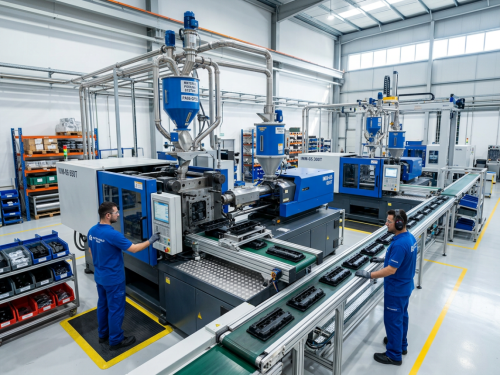
Bolt boss engineering is where plastic covers demand precision manufacturing. In our facility, we mold bolt bosses with integrated brass or steel compression limiters that prevent the plastic from being crushed under repeated torque cycles. The limiter height is controlled to +/-0.05mm because a limiter that is 0.1mm too tall creates a preload gap and oil leak; a limiter 0.1mm too short allows plastic creep over thermal cycles. Our 130T-650T injection molding machines run centralized feeding and controlled hold pressure to keep the bolt boss geometry consistent across a million-unit annual output. The valve cover invention patent held by our engineering team specifically addresses clamp-load distribution across long flange spans, using rib geometry to transfer load to bolt bosses without gasket pinch.
A real-world pitfall: a technician replaces a Honda K24 valve cover, works from one end to the other in a straight line, and torques each bolt fully before moving to the next. The result is a slight cover bow, a pinched gasket at the far corner, and a leak by 500 miles. The correct approach - center first, spiral outward, two passes - would have prevented this. Another common error is reusing over-torqued bolts that show visible thread stretching; these will read correct on the torque wrench but deliver only 60-70% of specified clamp force.
Industry misconceptions to correct: (1) 'Tighter is better' - excess torque cracks plastic bosses and crushes gaskets, causing leaks within thermal cycles. (2) 'You can eyeball it if you have experience' - human torque estimation error runs 25-40% on small fasteners. (3) 'All bolts on the cover use the same torque' - stud-type or through-bolts penetrating oil galleries often specify different values. (4) 'Once torqued, forget them' - many OEMs recommend a re-torque check at the first oil change after gasket replacement.
FAQ:
FAQ: Q: Should I use thread sealant on valve cover bolts? A: Only on bolts that penetrate into coolant or oil passages, typically marked in the service manual. Standard perimeter bolts thread into blind bosses and need no sealant. Using thread locker on perimeter bolts can prevent proper clamp load and complicate future service.
FAQ: Q: Can I reuse valve cover bolts? A: Yes on standard bolts, unless the OEM specifies torque-to-yield (TTY) design, common on some VW/Audi applications. Inspect for stretching by rolling the bolt on a flat surface - any wobble indicates yield. Replace bolts with damaged threads or corrosion at the head.
FAQ: Q: What if I do not have a torque wrench? A: Do not proceed. Small fastener torque cannot be estimated accurately by hand, and undertorque leaks or overtorque cracks are guaranteed. A basic click-type torque wrench in the 2-20 Nm range costs under $50 and pays for itself on the first job.
FAQ: Q: How do I know if my torque wrench is accurate? A: Calibrate annually or after any drop. A quick field check: torque a bolt to 10 Nm with your wrench, then verify with a second wrench of a different brand. Discrepancy over 10% means at least one wrench needs recalibration.
FAQ: Q: My bolt spins freely without reaching torque - what happened? A: The bolt boss threads have stripped, typically from prior overtorque or corrosion. On plastic covers with brass inserts, the insert may have spun in the plastic. Replace the cover; thread repair on structural bosses is not reliable for sealed applications.