 EN
EN


Aftermarket valve cover warranty coverage typically ranges from 12 to 36 months depending on manufacturer certification level, testing depth, and market positioning. IATF 16949-certified producers generally offer longer warranty terms because their validated quality management systems provide statistical confidence in field performance - warranty length is not a marketing promise, it is a calculated commitment backed by test data and failure-rate modeling.
Understanding what is actually covered is the first step in evaluating a warranty. A comprehensive warranty covers material defects such as porosity in aluminum castings, weld line failures in plastic composites, cracking under normal thermal cycling, and dimensional warp beyond the OEM tolerance window (typically +/-0.3mm flatness across the flange). It also covers manufacturing defects like misaligned bolt holes, mislocated PCV or breather ports, incomplete threads in bolt bosses, and coating defects that lead to premature corrosion. Gasket seal failures under normal operation are covered when the failure originates from the cover itself - a warped flange or crushed gasket channel, for example - and premature coating degradation is covered when the coating peels or oxidizes before its rated service life.
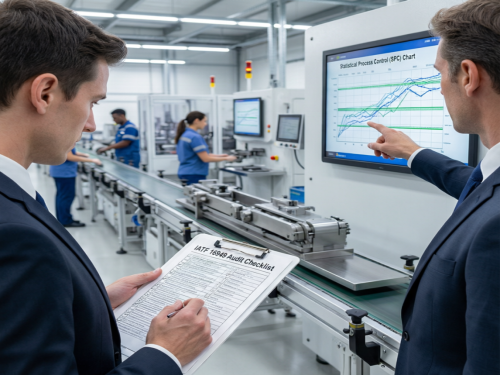
Warranty tiers correlate directly to manufacturer capability. Budget and generic suppliers typically offer 6-12 months with minimal or no validation testing, relying on visual inspection and dimensional gauging only. Mid-range suppliers offer 12-24 months backed by ISO 9001 certification and limited functional testing - usually a sample air tightness test and visual quality inspection. OE-equivalent suppliers offer 24-36 months with IATF 16949 certification, full APQP/PPAP documentation, and validation testing across the environmental envelope: salt spray to 480 hours, thermal shock cycling from -40C to 150C, vibration profiles matching OEM specs, and pressure-decay air tightness at 30-50 kPa. In prose comparison form: a $12 budget cover carries a 6-month warranty and a 3-8% field failure rate; a $25 mid-range cover carries 18 months and 1-3% failure; a $40 OE-equivalent cover carries 36 months and under 0.5% failure. Over a 3-year service window, the OE-equivalent is often cheaper on a total-cost basis when installation labor is included.
At Anhui Runming Auto Parts, we validate every new tooling program through the full IATF 16949 test suite before it ships to any of the 80+ countries we serve. Our test lab runs air tightness pressure-decay checks on 100% of production, salt spray at 480-720 hours per ASTM B117 on coated components, high-temperature aging at 150C for 500-1000 hours to verify PA66-GF30 retains at least 70% of tensile strength, and vibration testing to simulated engine profiles. We also run image-based dimensional inspection at critical control points - flange flatness, bolt hole location, PCV port alignment - to catch process drift before it reaches a customer. This validation depth is what allows us to back our 150+ valve cover models with warranty terms that match or exceed OEM aftermarket standards.
A real-world scenario: a fleet operator sourcing valve covers for a Nissan QR25DE engine chose a $14 unbranded cover with a 6-month warranty. Within 8 months, 4 of 20 units developed hairline cracks at the bolt bosses due to inadequate glass-fiber orientation control during molding. Warranty was expired, replacement plus labor cost $180 per unit. Had the operator specified an IATF 16949-certified cover with a 24-month warranty at $32 per unit, the two failures that occurred within 24 months would have been replaced at no cost, saving $360 net.
Common industry pitfalls: (1) Assuming warranty duration is arbitrary marketing - it is not; it is calculated from validated failure-rate data. (2) Not reading exclusions - many low-tier warranties exclude 'installation damage,' 'improper use,' and 'unauthorized modification,' effectively voiding coverage for common field scenarios. (3) Assuming labor is covered - most aftermarket warranties cover parts only. (4) Not documenting failures - warranty claims typically require the original invoice, VIN, mileage at failure, and often photos of the failure mode. (5) Buying from unverified distributors - warranty claims must flow back through the original point of sale.
FAQ:
FAQ: Q: Does warranty length indicate quality? A: It correlates strongly. Manufacturers do not offer 36-month warranties without durability test data supporting a failure rate low enough to make that commitment profitable. Ask the supplier for their test protocol summary - IATF 16949 producers can provide this on request.
FAQ: Q: Are labor costs covered under parts warranties? A: Rarely. Most aftermarket warranties cover replacement parts only, not installation labor. Some OE-equivalent tiers offer labor reimbursement caps of $75-150 per claim on documented failures, but this is negotiated at the distributor level, not standard consumer coverage.
FAQ: Q: What voids a valve cover warranty? A: Common exclusions include modification (drilling additional ports, machining the flange), use with non-OEM gasket types, installation without a calibrated torque wrench, running the engine with incorrect oil grade, and off-road or racing use. Read the terms before installation.
FAQ: Q: How do I file a warranty claim? A: Contact the original point of sale with the invoice, VIN, mileage at failure, photos of the failure mode, and a description of installation conditions. IATF 16949 producers typically respond within 5-10 business days with a disposition.
FAQ: Q: Can I extend a warranty beyond the standard term? A: Not usually at the consumer level, but fleet and OEM aftermarket buyers can negotiate extended coverage as part of volume contracts, typically backed by additional validation testing specific to the fleet application.