 EN
EN

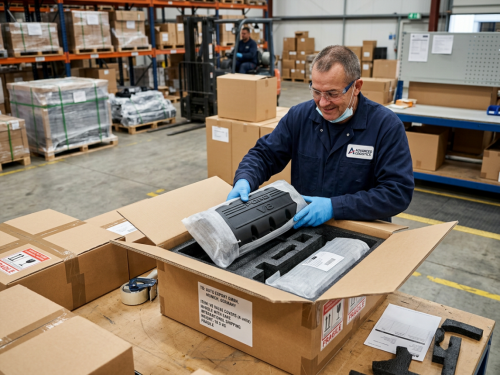
Valve cover packaging directly determines arrival condition, with improper methods causing 3-8% damage rates versus under 0.5% with engineered packaging solutions. In global aftermarket distribution, packaging is not a cost line item to minimize - it is a controlled process that protects the value of every part shipped and preserves the manufacturer's warranty economics. A $30 cover damaged in transit can cost $80-120 to replace when reverse logistics, restocking, and customer goodwill are included.
Poor packaging fails in predictable ways. Cracked bolt bosses occur when a heavy cover point-loads against a corrugated wall during drop or vibration events - a typical FedEx or ocean freight package experiences 30-80G shock loads at handling transitions. Scratched sealing surfaces create leak paths that survive final inspection but fail on the customer's engine within thermal cycles. Broken PCV baffles snap under sustained vibration when the internal plastic ribs resonate against loose packaging. Warped flanges result from stacking weight when covers are shipped without vertical load distribution - a 20kg carton stack on an unprotected cover can induce 0.5-1.0mm of flange deflection over a 30-day ocean transit, exceeding the +/-0.3mm OEM flatness tolerance and guaranteeing a seal failure.
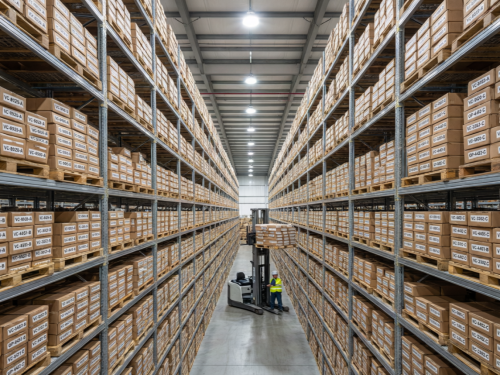
Best-in-class packaging follows a layered protection strategy. First, individual covers are placed in anti-static PE foam bags to prevent surface abrasion. Sealing flanges are wrapped with 3-5mm PE foam sheet or cap-fitted with molded foam protectors. Bolt boss areas receive foam caps because these are the most fracture-sensitive geometry on plastic covers. The wrapped unit is placed in a form-fitted corrugated insert - either die-cut kraft or expanded polyethylene - that immobilizes the cover in all six axes. The insert loads into a double-wall B/C flute carton rated for a minimum 20kg stacking load and 200 psi bursting strength. Cartons are marked with orientation arrows, fragile symbols, and moisture-warning labels for sea freight. Palletization uses corner boards, edge protectors, and stretch wrap with a top cap for weather protection.
Comparing packaging tiers in prose form: loose poly bags packed with fill in a single-wall box run about $0.30 per unit in materials and yield 5-8% damage rates - unacceptable for OEM-equivalent aftermarket. Foam wrap with cardboard dividers runs $0.80 per unit and cuts damage to 1-3%, adequate for regional distribution but risky for intercontinental shipping. Custom molded EPE or die-cut inserts run $1.50 per unit and achieve under 0.5% damage rates, the standard for OE-tier suppliers shipping to global markets. When damage cost per unit ($80-120 replacement) is weighed against packaging cost delta ($1.20 per unit), engineered packaging pays back at any damage rate above 1.5%.
At our facility in Si County, Anhui, we operate dedicated packaging lines matched to specific valve cover geometries across our 150+ model catalog. Every packaging design goes through a validation protocol that includes ISTA 3A random vibration testing, drop testing from 76cm on all six faces, and a 30-day compression test simulating stacked ocean freight. For customers in the 80+ countries we serve, we adjust packaging for the transit mode - air freight tolerates lighter packaging with less moisture protection, while sea freight demands moisture-barrier bags with silica gel desiccant (typically 5-10g per unit) and heavier corrugated grades to survive humidity swings in container holds. Our image-testing station verifies seal surface integrity post-packaging on a statistical sample basis before pallet release.
A real-world case: a distributor in South America received a container of Toyota 2GR-FE valve covers packaged in single-wall boxes with loose foam fill. Ocean transit through the equatorial zone exposed the container to sustained 40C interior temperatures and 90% humidity. On arrival, 12% of covers showed flange warp beyond spec and 4% had cracked bolt bosses. After switching to double-wall cartons with molded EPE inserts and desiccant, the next shipment showed 0.3% damage - a 40x improvement at a cost delta of $1.10 per unit.
Common industry pitfalls: (1) Reusing supplier packaging for outbound distribution without validating stacking load. (2) Ignoring moisture protection on sea freight - plastic covers absorb moisture that affects sealant bonding for weeks after arrival. (3) Skipping orientation marking, leading to sideways storage that stresses bolt bosses. (4) Overpacking to save on carton count - four covers in one box with inadequate dividers cause impact damage as they shift. (5) Using recycled corrugated below 200 psi bursting strength for international shipping.
FAQ:
FAQ: Q: Should valve covers ship with gaskets pre-installed? A: No. Ship gaskets separately in sealed bags to prevent compression set during storage - rubber gaskets under sustained pressure for 30+ days lose 15-25% of their sealing recovery. Pre-installation also risks contamination of the sealing surface.
FAQ: Q: What packaging suits sea freight best? A: Moisture-barrier polyethylene bags with 5-10g silica gel desiccant, sealed and placed inside form-fitted corrugated inserts within double-wall B/C flute cartons rated for 20kg+ stacking. Palletize with corner boards, top cap, and stretch wrap. Include humidity indicator cards for high-value shipments.
FAQ: Q: How much does engineered packaging add to cost? A: About $1.00-1.50 per unit versus $0.30 for minimal packaging. This is recovered on the first prevented damage claim, and it protects the brand reputation of both the manufacturer and the distributor.
FAQ: Q: Can I ship valve covers without individual boxing to save space? A: Only within a form-fitted multi-cavity insert where each cover is fully immobilized. Loose bulk packing causes surface abrasion and boss impact damage exceeding 8% in transit.
FAQ: Q: What is the shelf life of packaged valve covers in a warehouse? A: 5-10 years for plastic and metal covers stored in original packaging at 15-25C and under 70% humidity. Rubber gaskets have a shorter 3-5 year shelf life and should be inventoried separately with FIFO rotation.