 EN
EN

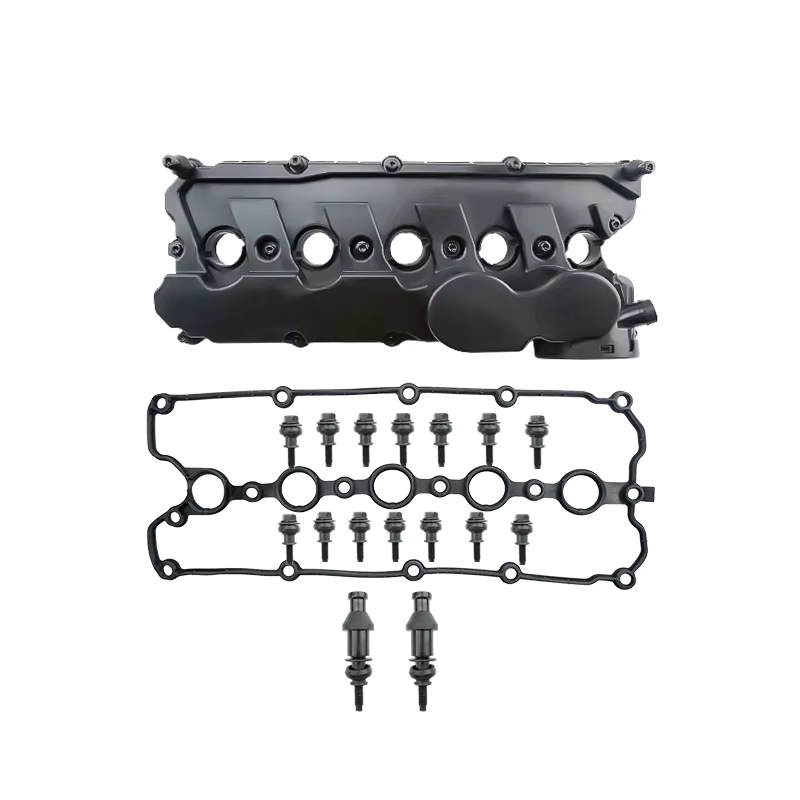
Lightweight Advantage: How Aluminum Rocker Cover Reduces Mass Without Sacrificing Strength
Aluminum Alloys’ Superior Strength-to-Weight Ratio in Engine Top-End Applications
Aluminum rocker covers leverage the metal’s exceptional strength-to-weight ratio to reduce unsprung mass without compromising structural integrity. Aluminum alloys weigh roughly one-third as much as steel yet deliver comparable tensile strength—making them uniquely suited for valve-train enclosures. This balance holds under sustained high-temperature oil exposure, where plastic alternatives risk warping or embrittlement. In engine top-end applications—where rotating and reciprocating inertia directly affect responsiveness—aluminum enables wall thicknesses as low as 2–3 mm in die-cast designs while maintaining resistance to oil pressure, vibration, and thermal cycling. The result is a component that matches or exceeds steel’s rigidity at approximately half the mass.
Impact on Vehicle Dynamics, Fuel Efficiency, and Powertrain Responsiveness
Reducing weight at the engine’s highest point lowers the vehicle’s center of gravity, improving handling stability and transient response. Though an aluminum rocker cover typically saves only 0.5–1 kg versus steel, that reduction carries disproportionate influence across the powertrain: lighter valvetrain components decrease rotational inertia, enabling quicker throttle response and more precise valve timing control. From a fuel-efficiency perspective, industry data from the U.S. Department of Energy confirms that every 10% reduction in vehicle curb weight yields a 6–8% improvement in real-world fuel economy. Aluminum rocker covers contribute meaningfully to this goal by shedding unnecessary mass from an otherwise dense assembly. In performance applications, the weight savings also reduce parasitic losses at high RPM—allowing faster engine spool-up and more consistent power delivery.
Thermal & Structural Durability: Aluminum Rocker Cover Performance Under Real-World Stress
Efficient Heat Dissipation vs. Plastic and Steel Alternatives
Aluminum’s thermal conductivity—ranging from 150–220 W/mK—is 5–15 times greater than most plastics (0.2–0.3 W/mK) and 30–50% higher than typical steel alloys (15–50 W/mK). This property allows aluminum rocker covers to actively dissipate heat from the valvetrain, preventing localized hot spots that accelerate oil oxidation and valve train wear. Unlike insulating plastic covers—which often require supplemental heat shielding—aluminum maintains uniform surface temperatures, reducing thermal cycling stress at gasket interfaces and mitigating seal hardening, a leading cause of leaks in high-temperature operation.
Vibration Resistance and Fatigue Life in High-RPM and Turbocharged Engines
In turbocharged engines operating at up to 20 psi boost, harmonic vibrations pose a critical challenge to valvetrain integrity. Aluminum’s crystalline microstructure provides superior damping across frequencies from 200–8,000 Hz—unlike brittle plastics prone to stress fractures near bolt holes or rigid steel that transmits resonance. Independent endurance testing simulating 150,000 miles of high-RPM operation shows aluminum covers achieving 40% longer fatigue life than plastic equivalents. This damping capacity also preserves fastener clamping force in overhead cam configurations, making aluminum essential for engines regularly exceeding 7,000 RPM.
| Material Property | Plastic | Steel | Aluminum |
|---|---|---|---|
| Thermal Conductivity (W/mK) | 0.2-0.3 | 15-50 | 150-220 |
| Vibration Damping Capacity | Low | Medium | High |
| Fatigue Limit (MPa) | 20-30 | 200-300 | 70-100 |
| Weight Density (g/cm³) | 1.1-1.5 | 7.8 | 2.7 |
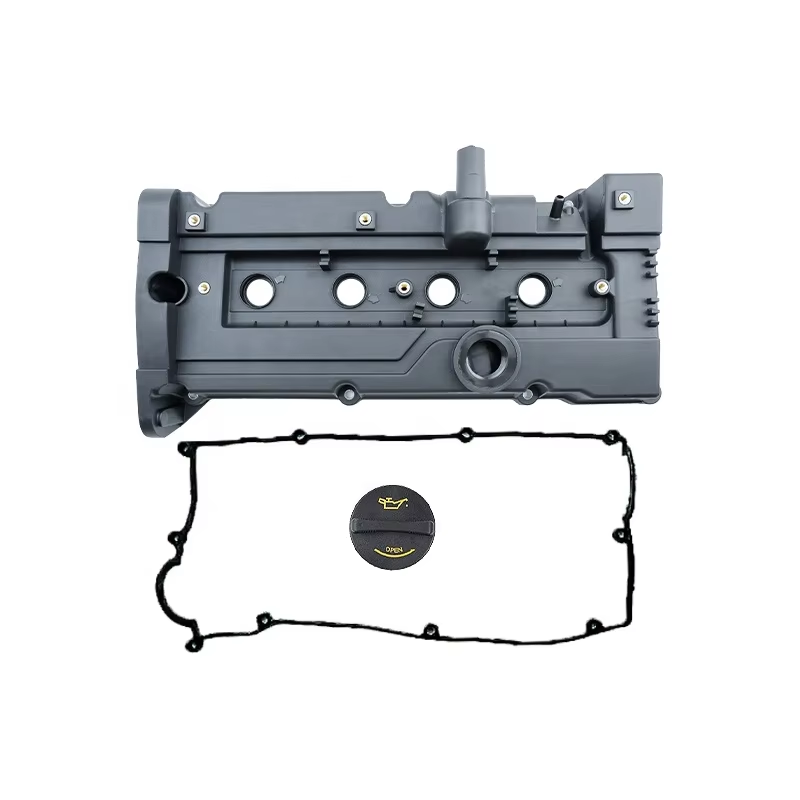
Long-Term Reliability: Aluminum Rocker Cover Versus Plastic Valve Covers
Plastic valve covers offer low initial cost and light weight—but their long-term reliability suffers under repeated thermal cycling. Exposure to engine heat causes progressive embrittlement, especially near bolt flanges and sealing surfaces, increasing susceptibility to cracking and oil leakage. Aluminum rocker covers, by contrast, retain dimensional stability and mechanical resilience across thousands of heat-up/cool-down cycles. Their inherent strength resists impact and vibration damage, while efficient heat conduction keeps gasket temperatures lower—extending seal life significantly. Though aluminum is susceptible to galvanic corrosion in mixed-metal environments, modern protective treatments like anodizing or powder coating provide robust, long-lasting defense against road salt, moisture, and underhood contaminants. For fleets and high-mileage applications, the higher upfront investment pays back through reduced replacement frequency, fewer oil-related service interventions, and lower total cost of ownership over the engine’s service life.
Strategic Adoption Considerations for Aluminum Rocker Cover Integration
Balancing Cost, Corrosion Mitigation, and Precision Gasket Interface Design
Adopting aluminum rocker covers demands thoughtful engineering trade-offs—not just material substitution. While aluminum commands a premium over plastic, its durability, thermal performance, and service-life advantages often yield lower total cost of ownership. Critical to success is corrosion mitigation: engineers specify compatible aluminum alloys (e.g., A380 or A390) and apply protective finishes such as Type II anodizing or automotive-grade powder coating to withstand harsh environmental exposure. Equally vital is gasket interface design—aluminum’s stiffness and coefficient of thermal expansion require precisely machined sealing surfaces and gasket materials engineered to accommodate thermal growth without creep or extrusion. A poorly matched interface remains the most common cause of oil leakage, undermining all other benefits. Early collaboration with die-casting specialists ensures optimal wall thickness distribution, draft angles, and ribbing—preserving weight savings while guaranteeing structural integrity and minimizing post-production rework.
FAQ
Q1: What are the key benefits of using aluminum rocker covers over plastic ones?
Aluminum rocker covers offer superior thermal conductivity, vibration resistance, and longevity. Unlike plastic, they do not warp or crack easily under thermal stress, making them ideal for high-performance or high-mileage engines.
Q2: How much weight can be saved using aluminum rocker covers?
Typically, aluminum rocker covers save about 0.5–1 kg compared to their steel counterparts. This reduction improves vehicle dynamics, fuel efficiency, and engine responsiveness.
Q3: Are aluminum rocker covers more expensive than plastic ones?
Yes, aluminum covers are generally more expensive initially, but they provide cost-effective benefits over time through their durability, reduced replacement frequency, and improved performance.
Q4: Do aluminum rocker covers resist corrosion?
Modern aluminum rocker covers are treated with protective coatings like anodizing or powder coating, offering robust protection against corrosion in mixed-metal or harsh environments.
Q5: Why is thermal conductivity important in rocker covers?
High thermal conductivity in aluminum helps dissipate heat efficiently, preventing localized overheating in the valvetrain and extending both oil and gasket life.
Table of Contents
- Lightweight Advantage: How Aluminum Rocker Cover Reduces Mass Without Sacrificing Strength
- Thermal & Structural Durability: Aluminum Rocker Cover Performance Under Real-World Stress
- Long-Term Reliability: Aluminum Rocker Cover Versus Plastic Valve Covers
- Strategic Adoption Considerations for Aluminum Rocker Cover Integration
- FAQ