 EN
EN

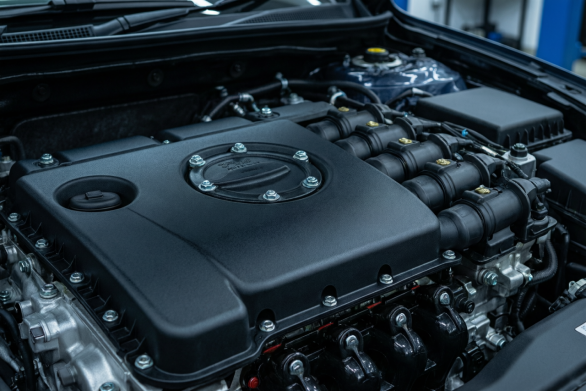
Quick Answer: An engine valve cover is the topmost sealing component of an internal combustion engine. It bolts to the cylinder head, encloses the camshafts, rocker arms, and valve springs, retains motor oil within the valvetrain, and connects to the PCV (Positive Crankcase Ventilation) system. For B2B aftermarket buyers, valve covers are one of the highest-volume engine consumables, with replacement demand driven by gasket failures, plastic embrittlement, and oil contamination after 80,000–150,000 km.
What Does a Valve Cover Actually Do?
A valve cover performs four core jobs simultaneously. First, it seals the valvetrain against atmospheric contamination, dust, and moisture. Second, it contains pressurized motor oil as it splashes from the camshafts and lifters during operation. Third, it routes crankcase blow-by gases through the PCV valve back into the intake manifold for re-combustion, helping meet emissions regulations such as Euro 6 and China VI. Fourth, it provides mounting points for ignition coils on overhead-cam engines (most modern Toyota, Nissan, and Hyundai designs).
Materials: Plastic vs Aluminum
|
Feature |
Plastic (Glass-Filled Nylon) |
Aluminum Alloy |
|
Weight |
30–50% lighter |
Heavier, more rigid |
|
Heat resistance |
150–180°C continuous |
250°C+ continuous |
|
Cost |
40–60% lower |
Higher raw material cost |
|
Typical applications |
Modern OEM (post-2005) |
Performance, classic, diesel |
|
Aftermarket dominance |
~85% of replacement volume |
~15% (specialty/heavy-duty) |
Most modern aftermarket valve covers (including those produced by Ranmi at our 26,666 m² Anhui facility) use glass-fiber reinforced PA6 or PA66 nylon, injection-molded on 130T to 650T machines. This matches OEM specifications for Toyota, Nissan, Honda, Hyundai, Audi, and most domestic Chinese vehicles.
Why Valve Covers Fail
The three most common failure modes for B2B buyers to understand are:
- Gasket compression set — the rubber gasket loses elasticity after 5–8 years of heat cycling and begins to leak oil onto the exhaust manifold or into spark plug wells.
- Plastic stress fractures — heat aging causes micro-cracks around the bolt bosses or PCV port, especially in turbocharged engines.
- Internal oil baffle delamination — the integrated baffle that prevents oil ingestion into the PCV system can detach, leading to excessive oil consumption.
Sourcing Considerations for Distributors
When evaluating an aftermarket valve cover supplier, prioritize:
- IATF 16949 certification (the automotive-specific evolution of ISO 9001/TS 16949)
- Air-tightness testing on 100% of finished units (not statistical sampling)
- Verified OE cross-references to the original equipment part number
- Mold lifetime and capacity — a manufacturer producing 1,000,000 units/year on 10+ injection machines can guarantee continuity for 10+ years
- Complete assembly capability — copper nut welding, oil seal pressing, and gasket fitment performed in-house rather than outsourced
FAQ
Q1: Is a valve cover the same as a cylinder head cover? Yes. "Valve cover" is the common North American term and "cylinder head cover" is the European/OEM technical term. Both describe the identical component.
Q2: Can I use a plastic aftermarket valve cover to replace an aluminum OE cover? Only if the manufacturer has tested the conversion. Mounting bolt patterns, gasket grooves, and PCV port routing must match exactly. Reputable aftermarket producers like Ranmi develop molds against the original OE drawing.
Q3: How long should an aftermarket valve cover last? A correctly manufactured glass-filled nylon valve cover should match OE service life: 200,000+ km or 10 years under normal driving conditions.
Q4: Do valve covers include the gasket? This depends on packaging policy. Ranmi/Nansen kits typically include the cover, gasket, copper bushings, oil seal, and required fasteners as a complete service-ready set.
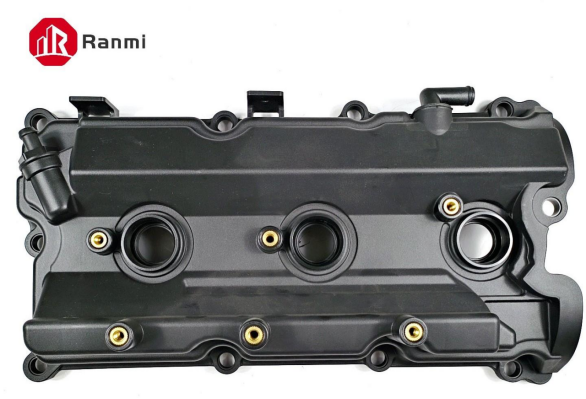
Figure: A Ranmi-branded plastic valve cover assembly with integrated PCV port and copper inserts.