 EN
EN

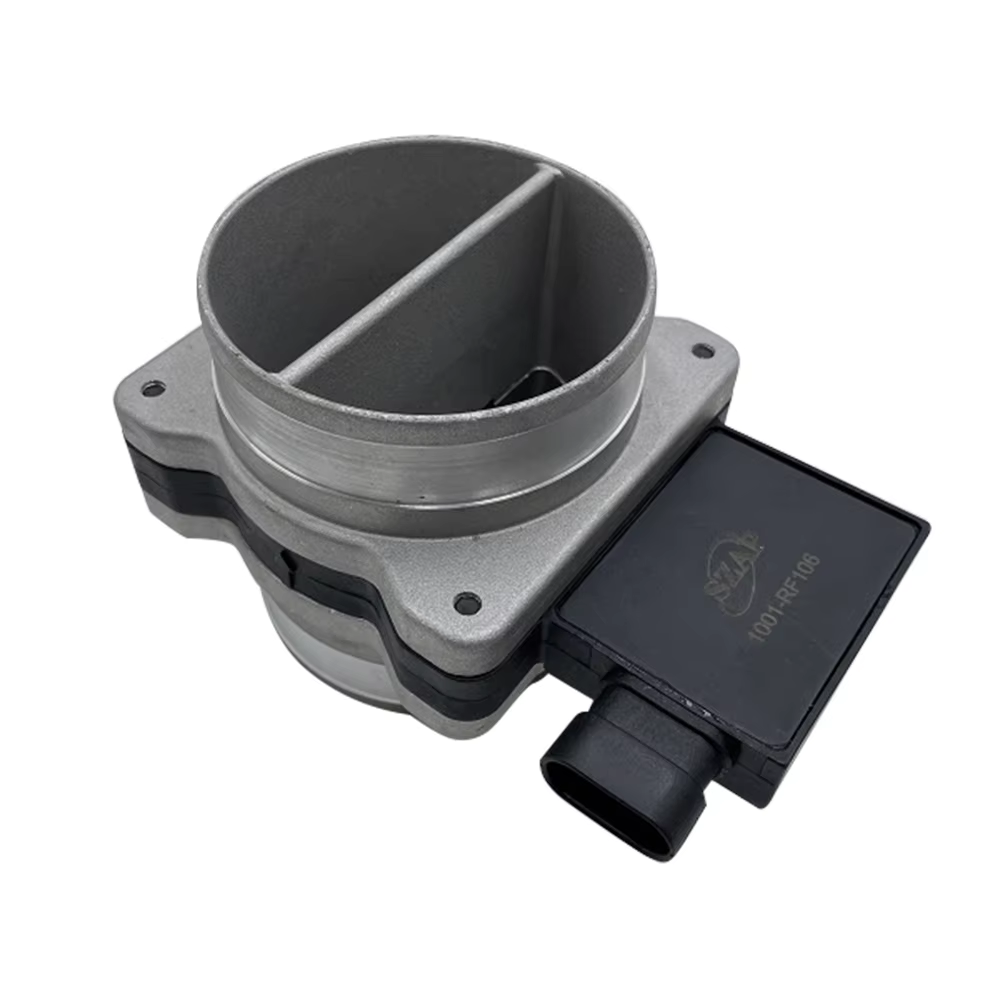
Why Manufacturer Trustworthiness Determines MAF Sensor Accuracy and Long-Term Reliability
How Manufacturing Rigor Impacts Calibration Stability, Signal Integrity, and Contamination Resistance
A trusted standard mass air flow sensor manufacturer invests in precision engineering and disciplined production—not just component sourcing. Consistent calibration stability across temperature extremes and airflow ranges demands tight assembly tolerances, automated calibration against master references, and rigorous burn-in testing. Signal integrity relies on clean solder joints, high-grade circuitry, and proper electromagnetic shielding—defects here introduce noise that misleads the ECU. Contamination resistance stems from controlled cleanroom assembly, hermetic or gasketed housing seals, and anti-static handling to prevent microscopic debris from adhering to the sensing element. Statistical process control (SPC) further ensures real-time detection of performance drift. Together, these practices deliver sensors that maintain accuracy from installation through years of service—not just during initial bench testing.
Real-World Consequences of Substandard Production: Drift, Noise, and Premature Failure
Cutting corners in manufacturing delivers immediate, costly consequences. Calibration drift causes persistent fuel trim errors, reducing efficiency and increasing emissions. Electrical noise from poor shielding or grounding leads to erratic idle, hesitation, and false diagnostic trouble codes. Premature failure often follows thermal cycling stress or contamination ingress—especially when low-grade hot-wire elements oxidize or housings warp under repeated heat exposure. Crucially, substandard producers frequently skip validation steps like thermal shock, vibration endurance, and long-term contamination trials. In practice, these sensors fail within months—not years—driving up warranty claims, field downtime, and total cost of ownership. Reputable manufacturers counter this risk with transparent failure-rate data and extended warranties, signaling confidence rooted in process discipline—not marketing.
OEM vs. Aftermarket Standard Mass Air Flow Sensor Manufacturer: Key Reliability Signals
Must-Have Certifications and Process Controls (ISO/TS 16949, AEC-Q200, Full Traceability)
Certifications are not checkboxes—they’re evidence of embedded quality discipline. ISO/TS 16949 (now superseded by IATF 16949) validates a manufacturer’s end-to-end automotive quality management system—from design controls and supplier oversight to final test protocols. AEC-Q200 certification confirms component-level robustness against thermal cycling, mechanical shock, and humidity—conditions every MAF sensor faces under hood. Equally vital is full traceability: each unit must carry a unique lot or serial number linking back to its raw materials, assembly station, calibration log, and environmental test history. These controls directly mitigate calibration drift and signal degradation—particularly in heavy-duty, high-temperature, or high-vibration applications where marginal processes fail first.
When Aftermarket Manufacturers Surpass OE Standards — And How to Validate Their Claims
While OE sensors meet exact vehicle specifications, top-tier aftermarket manufacturers sometimes exceed those benchmarks—using upgraded platinum-coated sensing wires, enhanced thermal compensation algorithms, or more aggressive validation cycles. But such claims require verification. Demand third-party test reports showing calibration accuracy (±1.5% or better across 0–120°C), long-term drift (<0.5% over 10,000 hours), and contamination resistance under SAE J1930-simulated conditions. Confirm they hold IATF 16949 and AEC-Q200 certifications—and offer warranty terms matching or exceeding OE coverage. The comparison table below highlights how reliability signals differentiate tiers:
| Attribute | OE Supplier | High-Quality Aftermarket | Low-Quality Aftermarket |
|---|---|---|---|
| Quality control | Certified, documented | Certified, documented | Inconsistent, unverified |
| Calibration accuracy | Meets spec | Meets or exceeds spec | Often drifts |
| Traceability | Full batch tracking | Full serialization | Minimal or none |
| Warranty | Strong (often lifetime) | Comparable | Weak or absent |
| Unit price | Highest | Moderate to high | Lowest |
Transparency—not price—is the strongest predictor of field durability. For non-critical or cost-sensitive programs, rigorously validated aftermarket options can deliver compelling value without compromising reliability.
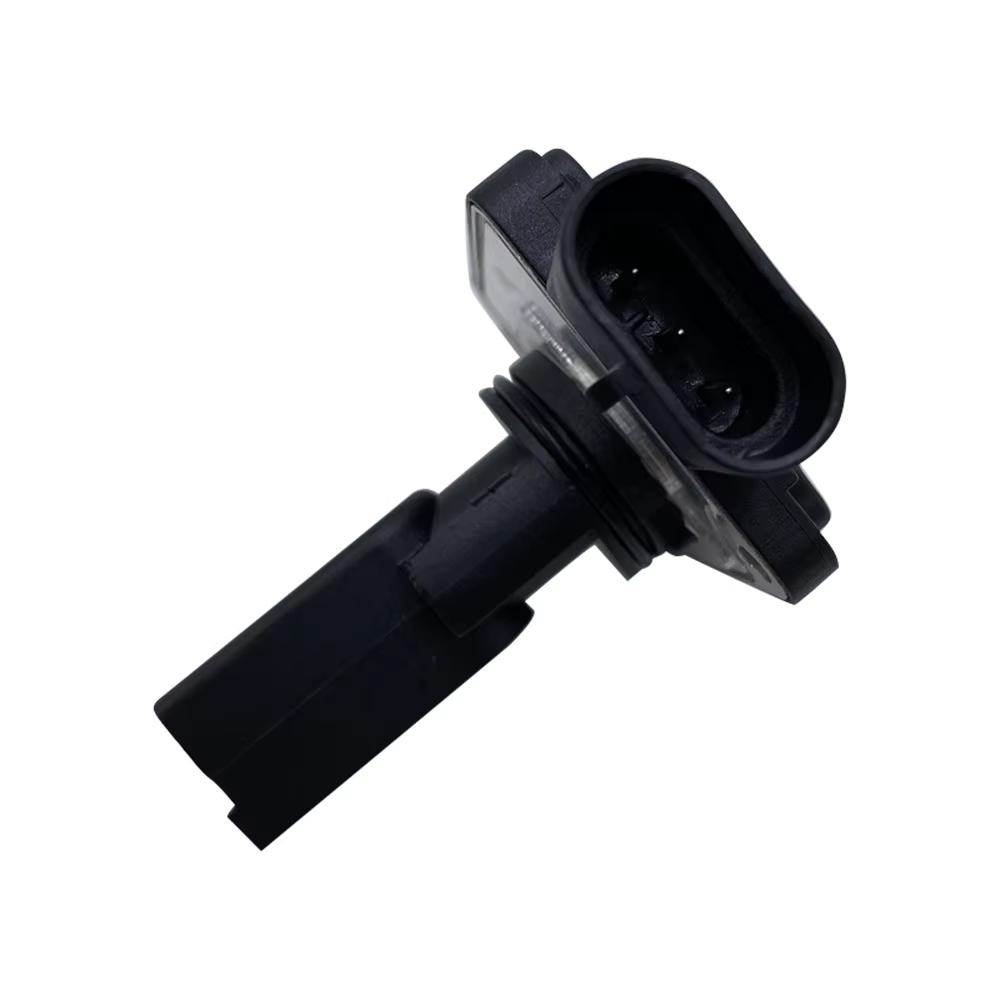
5 Non-Negotiable Selection Criteria for a Standard Mass Air Flow Sensor Manufacturer
Choosing the right standard mass air flow sensor manufacturer requires evaluating five foundational criteria—none of which can be compromised for cost savings:
- Certification & Process Control – Verify active IATF 16949 certification (not just ISO 9001) and AEC-Q200 qualification. Full traceability—from raw material batch numbers to final calibration logs—is mandatory.
- Calibration Stability & Signal Integrity – Require documented drift performance (<0.3% over 5 years at 85°C ambient) and signal-to-noise ratios ≥70 dB—exceeding typical OEM minimums.
- Contamination Resistance – Confirm validated protection against oil mist, road dust, and moisture ingress via IP67-rated housings, hydrophobic coatings, and airflow-path designs that minimize particle accumulation.
- Real-World Validation – Insist on third-party field data showing ≤50 ppm failure rates after 500+ thermal cycles and 1,000+ hours of simulated contamination exposure.
- Transparent Warranty & Support – A minimum three-year warranty—with clear, no-questions-asked replacement terms—is a non-negotiable indicator of product confidence and supply chain accountability.
Verifying Real-World Performance: Testing Protocols, Field Data, and Warranty Transparency
Interpreting Third-Party Benchmarks and Failure Rate Reports for B2B Procurement
Objective validation—not spec sheets—is what separates credible manufacturers from vendors relying on lab-only assurances. Accelerated life testing (e.g., 500+ thermal shock cycles per SAE J2412) and contamination resistance trials using standardized particulate loads provide quantifiable insight into long-term calibration stability and signal fidelity. Field data tells the definitive story: according to SAE International (2023), sensors from manufacturers lacking IATF 16949 certification show 32% higher premature failure rates in high-particulate environments. When reviewing reports:
- Prioritize failure distributions across temperature/humidity bands—not just MTBF averages
- Scrutinize whether lab simulations replicate real-world turbulence, pulsating airflow, and mixed contaminant exposure—not just static conditions
- Cross-check warranty duration with actual field replacement data: manufacturers offering five-year coverage typically demonstrate 40% lower field return rates
Reputable suppliers publish third-party–verified failure rate distributions—not cherry-picked success cases—and align warranty terms with documented durability outcomes. This forensic, evidence-led approach prevents procurement decisions based on promise rather than proven performance.
FAQ
- What certifications should a mass air flow sensor manufacturer have? Manufacturers should hold IATF 16949, AEC-Q200, and offer full traceability for quality assurance.
- How can I validate an aftermarket sensor’s quality? Check for third-party test reports, certifications, drift performance, and a robust warranty to ensure reliability.
- Why are contamination resistance and durability critical? Contamination resistance ensures sensor longevity in harsh environments, while durability minimizes premature failures and field replacements.
- What is statistical process control (SPC) for sensor production? SPC uses real-time data to detect and correct manufacturing performance drift to improve consistency and quality.
- What role does warranty play in choosing a supplier? A strong warranty signals manufacturer confidence in their product and helps reduce total cost of ownership through better support.
Table of Contents
- Why Manufacturer Trustworthiness Determines MAF Sensor Accuracy and Long-Term Reliability
- OEM vs. Aftermarket Standard Mass Air Flow Sensor Manufacturer: Key Reliability Signals
- 5 Non-Negotiable Selection Criteria for a Standard Mass Air Flow Sensor Manufacturer
- Verifying Real-World Performance: Testing Protocols, Field Data, and Warranty Transparency