 EN
EN

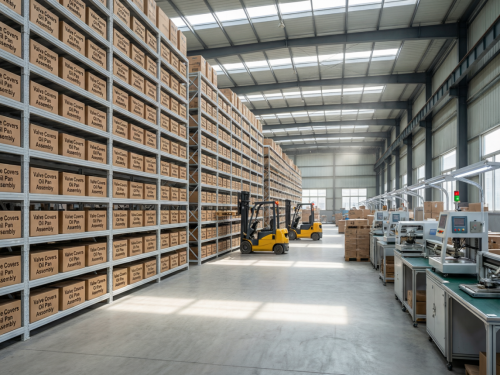
Aftermarket auto parts shelf life depends on material composition, storage environment, and packaging integrity. Rubber gaskets degrade in 3-5 years, while plastic and metal valve cover assemblies remain viable for 5-10 years under proper storage conditions. Understanding these limits protects distributors from writing off aged inventory and protects end users from installing parts that will fail prematurely due to material degradation rather than manufacturing defect.
Rubber compounds are the most time-sensitive. EPDM valve cover gaskets, common on Japanese and Korean applications, maintain full sealing performance for 3-5 years in sealed original packaging at controlled temperature. NBR gaskets, used on some diesel and older applications, share similar timelines but degrade faster in ozone-rich environments. Silicone gaskets extend to 5-7 years due to superior thermal and UV stability. The failure mode is progressive hardening: a fresh gasket has a Shore A hardness of 60-70 and compresses 25-30% under torque; after 5 years, hardness climbs to 80-85 and compression drops to 12-15%, insufficient to seal a warped or slightly rough flange. Cracking at bend radii typically appears at 6-8 years even in ideal storage.

Plastic valve covers made from PA66-GF30 (30% glass-filled nylon 6/6) survive 5-10 years in warehouse storage without loss of mechanical properties, provided they are protected from UV exposure and extreme humidity. The primary storage risk is moisture absorption - PA66 can absorb 3-8% moisture by weight, which reduces tensile strength by 15-30% and can cause dimensional swelling of 0.3-0.8%. This is reversible with proper drying (80C for 4-8 hours) before use, but many distributors and installers skip this step. UV exposure causes yellowing and surface embrittlement over 2-5 years of direct sunlight, but has minimal effect on covers stored in original opaque packaging.
Metal covers - typically cast aluminum for performance and diesel applications - are the most storage-stable, retaining full function for 10+ years with only cosmetic surface oxidation. The main storage risk is corrosion of steel inserts (bolt bosses, PCV mount plates) in humid conditions above 70% RH, and galvanic corrosion at mixed-metal joints. Stamped steel covers, less common in modern applications, require careful humidity control since bare steel surfaces oxidize visibly within 6 months of high-humidity exposure.
Ancillary components have their own timelines. PCV valves combining rubber diaphragms and plastic bodies typically last 3-5 years in storage before diaphragm stiffening causes stuck-open or stuck-closed failures. Oil separator elements with paper or synthetic filter media degrade in 5-7 years due to binder oxidation. Sensor components (crank position, cam position, oil pressure) with rubber seals share the 3-5 year gasket timeline. This is why complete valve cover assemblies with integrated PCV and sensors have a shelf life determined by the shortest-lived component, typically the rubber diaphragm.
Proper storage protocol extends shelf life significantly. Maintain warehouse temperature between 15-25C with under 70% relative humidity - a data-logging thermometer with monthly review is inexpensive insurance. Store parts away from direct sunlight, ozone-generating equipment (electric motors, welders), and volatile chemicals. Keep rubber components in sealed polyethylene bags with original packaging retained, and store on shelving away from concrete floors that can wick moisture. Rotate stock using FIFO (first-in, first-out) inventory management, and mark receiving dates on all packaging. For high-value SKUs, consider desiccant packs (silica gel at 5-10g per unit) inside the retail packaging.
At Anhui Runming Auto Parts, we engineer components using UV-stabilized PA66-GF30 grades from qualified resin suppliers, and validate long-term stability through high-temperature aging tests at 150C for 500-1000 hours followed by mechanical property retention testing. Parts leaving our facility carry a manufacturing date code embedded in the mold cavity, allowing distributors to verify age and manage FIFO across 80+ export markets. Our packaging strategy for long-transit destinations includes moisture-barrier bags and desiccant for parts expected to sit in inventory beyond 6 months.
A real-world scenario: a warehouse distributor discovered a pallet of Nissan QR20DE valve cover gaskets manufactured 6 years earlier, still in original packaging. Visual inspection looked acceptable, but hardness testing showed Shore A 82 versus a fresh gasket at 68. Installation on customer vehicles resulted in 40% comeback rate for perimeter leaks within 90 days. The lesson: rubber shelf life is not visible to inspection; date codes and FIFO discipline are the only reliable controls.
Common industry pitfalls: (1) Assuming sealed packaging equals infinite shelf life - all elastomers age even in original bags. (2) Ignoring date codes on inventory audits. (3) Storing rubber gaskets near electric motors or welding operations that generate ozone. (4) Skipping the PA66 moisture pre-drying step when parts have been stored in humid environments. (5) Treating all rubber compounds identically - EPDM, NBR, and silicone have different aging profiles.
FAQ:
FAQ: Q: Do plastic valve covers become brittle in storage? A: Not under normal warehouse conditions (15-25C, under 70% RH, protected from UV). PA66-GF30 retains over 90% of tensile strength for 5-10 years in sealed packaging. Extended UV exposure and sustained temperatures above 60C are the primary risks that accelerate embrittlement.
FAQ: Q: Should I discard gaskets past shelf life? A: Yes. Hardened gaskets will not conform to flange irregularities and will leak regardless of installation quality. The cost of a $5 gasket is trivial compared to the labor and customer goodwill cost of a comeback leak.
FAQ: Q: How do I read a manufacturing date code? A: Most valve covers have a molded date code near the mold cavity number, typically in YYWW format (year and week) or a Julian date. Some manufacturers use a clock-face symbol with an arrow indicating month. Contact the manufacturer if the format is unclear.
FAQ: Q: Can I extend rubber gasket shelf life with cold storage? A: Refrigerator storage at 4-10C can extend shelf life by 30-50% for elastomers, but requires sealed moisture-barrier bags to prevent condensation on removal. This is only economical for high-value or low-volume specialty parts.
FAQ: Q: What is the shelf life of an installed valve cover? A: Once installed and exposed to engine operating conditions, expect 8-15 years for plastic covers, 15-25 years for aluminum, and 5-8 years for rubber gaskets, depending on operating temperature, oil condition, and thermal cycling frequency.