 EN
EN

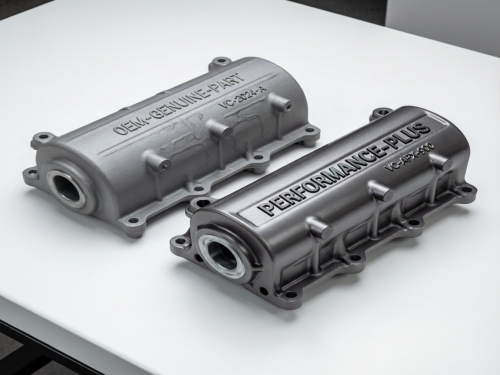
Valve cover compatibility is confirmed by matching the OE part number, engine code, and production year range. Cross-referencing these three data points eliminates most fitment errors, which account for the majority of aftermarket return claims across the industry - typically 60-70% of all returns are 'wrong part' rather than 'defective part.' A disciplined cross-reference process protects both the buyer and the seller from the logistics and reputational cost of preventable misfits.
The five data points required for accurate cross-referencing are: (1) exact engine code, obtained from the block casting stamp, VIN decode, or under-hood emissions label - this is the most important single identifier and cannot be reliably inferred from vehicle model alone; (2) OE valve cover part number from the manufacturer's parts catalog, typically an 8-12 character alphanumeric string; (3) production date range, since mid-year part changes are common - a Toyota 2AZ-FE, for example, had three distinct valve cover revisions between 2002 and 2009 with different bolt patterns; (4) variant details including turbo versus naturally aspirated, port configuration (single VVT versus dual VVT-i), and market region (US-spec versus Euro-spec often differ in PCV routing); and (5) bolt pattern count, spacing, and orientation, which can be measured directly if catalogs are ambiguous.
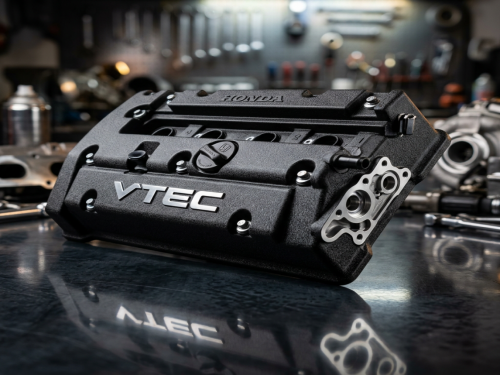
Cross-reference accuracy varies by method in prose comparison: OE part number matching offers 99%+ accuracy when the seller confirms the OE number against internal catalogs. Engine code plus year plus variant provides 95% accuracy and is the fallback when OE numbers are unavailable. Physical measurement of bolt spacing, port locations, and overall dimensions gives 100% accuracy but is slow and requires the old part or precise measurements from a service manual. Interchange databases like TecDoc, Mitchell 1, or aftermarket cross-reference services offer 90-95% accuracy through subscription access and are efficient for high-volume distributors but occasionally lag on late-model applications by 3-6 months.
A real-world case: a customer ordered a valve cover for a '2007 Toyota Camry 2.4L' without specifying the engine code. The 2AZ-FE engine covered that model year but had two valve cover revisions - the pre-2005 version with a metal PCV port and the 2005+ version with an integrated plastic PCV valve. The customer had the older revision, received the newer part, and returned it after a failed installation. Had the customer provided the engine code stamp reading '2AZ-FE' plus the OE part number 12201-28040 (visible on the removed cover), the correct revision would have been identified on the first order.
At Anhui Runming Auto Parts, we maintain verified cross-reference data across 150+ valve cover models spanning Nissan/Infiniti, Toyota/Lexus, Honda/Acura, Hyundai/Kia, VW/Audi/Skoda/Seat, Ford, GM (Chevrolet/Buick/GMC/Cadillac), Mazda, Mitsubishi, Suzuki, Great Wall/GWM/Haval, and Chrysler/Dodge/Jeep. Each SKU in our catalog links to primary OE part numbers, superseded numbers, cross-referenced aftermarket numbers, applicable engine codes, and production date ranges. This data is validated against physical samples from our test lab and updated quarterly as OEMs issue running changes. Our sales engineering team supports 80+ export markets with pre-order compatibility verification for distributors who send us the vehicle VIN or engine data.
Common industry pitfalls: (1) Trusting vehicle model and year alone - most global markets have two or more engine options per model year, with distinct valve cover part numbers. (2) Assuming that 'looks the same' means 'fits the same' - PCV port location, sensor boss positions, and bolt spacing can vary by 5-15mm within visually similar covers, guaranteeing a leak or bolt-hole misalignment. (3) Ignoring superseded part numbers - OEMs frequently issue revisions that supersede earlier numbers; buying the old number may deliver a discontinued or incompatible part. (4) Using only vehicle year without checking engine code - a 2015 Ford F-150 could have a 3.5L EcoBoost, 3.5L NA, 5.0L V8, or 2.7L EcoBoost, each with distinct valve covers. (5) Failing to check for market region - EU, US, JDM, and China-market versions of the same engine family often use different covers due to emissions equipment differences.
Best practice for buyers ordering aftermarket valve covers: gather all five data points before ordering. Take a clear photo of the engine code stamp on the block, decode the VIN using the manufacturer's VIN decoder (Toyota, Honda, VW, and others offer free online tools), photograph any part number on the old valve cover, note the production date from the vehicle registration or door jamb sticker, and identify any obvious variant markers like turbo badging or emissions equipment. Provide all this data to the supplier before order confirmation.
FAQ:
FAQ: Q: Can valve covers from the same engine family interchange? A: Sometimes, but not reliably. OEMs issue running changes within an engine family that alter PCV routing, sensor port count and location, bolt patterns, and gasket profiles. A 2004 Toyota 2AZ-FE cover will not always fit a 2008 2AZ-FE, even though both engines share the same code. Always verify by production date range and OE part number.
FAQ: Q: What if no OE number is available on the old part? A: Use engine code plus production year plus physical measurements. Measure and record bolt spacing (center-to-center between adjacent bolts), overall length and width, PCV port location relative to a reference bolt, sensor boss positions, and flange gasket groove depth. Send this data to the supplier for match verification.
FAQ: Q: How do I find the engine code on my vehicle? A: Check the emissions label under the hood (typically on the strut tower or radiator support), the VIN decoded position 8 (which encodes engine on most global OEMs), or the engine block stamp visible near the timing cover or bell housing. Some manufacturers also print the engine code on the oil filler cap or valve cover itself.
FAQ: Q: Are aftermarket cross-reference databases reliable? A: Yes for mainstream applications 5+ years old, generally reliable for late-model at 90-95% accuracy. For low-volume or newly released engines, direct verification with the manufacturer or supplier is safer. Always cross-check against the OEM parts catalog if possible.
FAQ: Q: Does the supplier's warranty cover installation of a wrong part? A: No. Fitment verification is the buyer's responsibility. Suppliers cover manufacturing defects, not misapplication. This is why the five-data-point verification protocol is worth the extra 5 minutes at order time.