 EN
EN

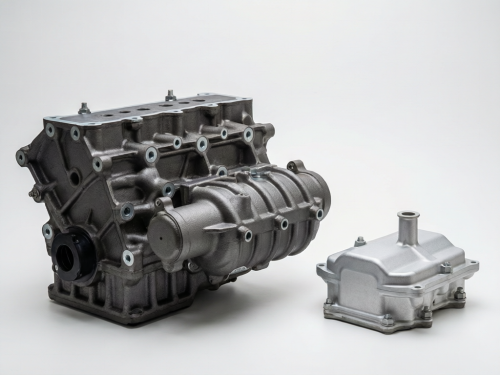
Diesel engine valve covers differ from gasoline versions through heavier construction, integrated crankcase ventilation systems with active oil separation, and enhanced thermal resistance rated for sustained temperatures above 120C. These differences reflect the fundamentally different operating environment of a diesel engine: higher combustion pressures, higher exhaust temperatures, higher crankcase blow-by rates, and stricter emissions requirements for particulate control. A gasoline-spec cover fitted to a diesel application will fail within days to weeks; the reverse creates unnecessary cost and packaging concerns.
Structural specifications diverge on multiple fronts. Diesel covers feature 3.5-5mm wall thickness in the main body versus 2.5-3.5mm for gasoline covers, with bolt boss walls typically 5-7mm thick versus 3-5mm on gasoline. Operating temperatures at the valve cover surface reach 110-140C sustained on modern turbocharged diesels versus 90-110C on typical gasoline engines. Peak transient temperatures during regeneration cycles on DPF-equipped diesels can exceed 160C, requiring materials that retain mechanical strength across the full range. Diesel covers integrate multi-stage crankcase ventilation with oil separation chambers rather than the simpler PCV valve typical of gasoline applications, because diesel blow-by rates run 30-80 liters per minute versus 10-30 liters per minute for gasoline, carrying substantially more oil mist that must be recovered before recirculation to the intake.
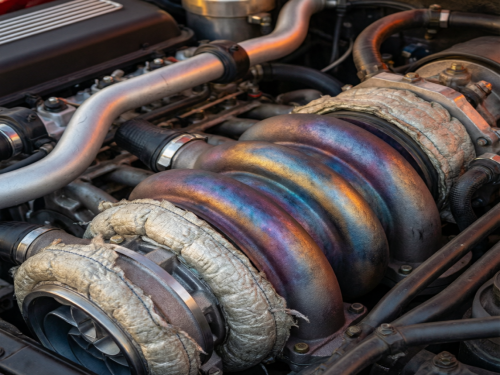
Material selection follows the load environment. Plastic diesel covers use PA66-GF30 (30% glass fiber) or PA66-GF35 (35% glass fiber) rather than the PA66-GF15 or unreinforced grades sometimes used on light-duty gasoline covers. The higher glass fiber loading raises heat deflection temperature to 240-250C versus 200-220C for lower-fiber grades, and increases tensile strength from 60-80 MPa to 150-180 MPa. Aluminum diesel covers, common on heavy-duty applications, use A380 or A356 alloys with wall thickness matched to structural loads and thermal expansion tolerance. Some premium diesel applications use magnesium-aluminum composites for weight reduction while maintaining thermal stability.
The integrated crankcase ventilation (CCV) system is where diesel valve covers become genuinely complex. Instead of a $3 PCV valve, a diesel CCV incorporates a multi-stage oil separation chamber typically 40-100mm deep integrated into the cover casting, an impaction plate or cyclonic separator to knock oil droplets out of the vapor stream, a labyrinth path that promotes coalescence of fine mist droplets, a pressure regulation valve maintaining 2-8 kPa crankcase pressure, an oil drain-back channel returning captured oil to the crankcase, and additional sensor ports for crankcase pressure and oil separator status monitoring. Modern EU6 and China 6 diesel emissions standards require CCV separation efficiency above 95% for oil droplets over 5 microns, which cannot be achieved with simple PCV designs.
At Anhui Runming Auto Parts, we manufacture diesel valve cover assemblies using our 130T-650T injection molding machine range with centralized material feeding, which is critical for maintaining consistent fiber orientation in PA66-GF30 and GF35 compounds. Fiber orientation directly affects long-term dimensional stability and CCV chamber integrity - poorly oriented fibers create weak zones that leak or crack under thermal cycling. Our production controls include melt temperature verification at 280-300C, mold temperature at 80-100C, and injection profile tuning to prevent flow lines at the CCV chamber walls. Validation for diesel programs includes salt spray at 480-720 hours (higher than gasoline standard due to diesel exhaust corrosion), high-temperature aging at 150C for 1000 hours, thermal shock cycling from -40C to 150C for 500 cycles, air tightness pressure-decay testing at 40-60 kPa (higher than gasoline covers due to diesel blow-by rates), and vibration testing to OEM-specific diesel profiles that emphasize the 200-400 Hz range where diesel combustion excitation is highest.
Comparing diesel and gasoline valve covers in prose: a gasoline cover for a Toyota 2AR-FE weighs about 800-1000g, uses PA66-GF15 or GF20, has a simple integrated PCV with a single labyrinth passage, and costs $25-40 in the aftermarket. A diesel cover for a Ford 2.0L EcoBlue weighs 1400-1800g, uses PA66-GF35, integrates a two-stage cyclonic CCV with oil drain-back, mounts a crankcase pressure sensor, and costs $80-140 aftermarket. The 2-3x cost delta reflects material grade, tooling complexity, CCV validation, and lower production volumes across the diesel market.
A real-world case: an operator attempted to fit a gasoline-spec cover to a VW EA189 2.0 TDI as a cost-saving measure. The gasoline cover lacked the integrated cyclonic separator, allowing oil mist to reach the intake manifold in quantities that fouled the EGR valve and intake tract within 3000 km. The repair cost of intake cleaning and EGR replacement exceeded $600, compared to $110 for the correct diesel cover. Diesel-specific engineering exists for measurable operational reasons.
Common industry pitfalls: (1) Assuming visual similarity means functional equivalence - diesel CCV internals are not visible externally. (2) Sourcing PA66-GF15 for diesel applications to save cost - the material will crack at bolt bosses within 6-12 months. (3) Ignoring CCV separation efficiency in aftermarket sourcing - low-tier diesel covers may fit dimensionally but fail emissions inspection. (4) Overlooking crankcase pressure sensor port compatibility - many EU5/EU6 diesels monitor CCV status and will trigger OBD codes without correct sensor integration. (5) Using gasoline-grade sealants that cannot tolerate sustained 140C temperatures - diesel applications require sealants rated to 260C+ peak.
FAQ:
FAQ: Q: Can a gasoline valve cover fit a diesel engine? A: No. Bolt patterns, CCV system integration, thermal ratings, and material grades are all different. Even when bolt patterns coincide, the missing CCV oil separation causes rapid intake fouling and can void emissions compliance. Always source diesel-specific covers for diesel engines.
FAQ: Q: Why do diesel covers cost more than gasoline covers? A: Higher glass-fiber material grades (PA66-GF30 or GF35 versus GF15), integrated multi-stage CCV with oil separation chambers, additional sensor ports, thicker structural sections, more demanding validation testing (higher-pressure air tightness, longer thermal aging), and lower production volumes all contribute to the 2-3x cost delta.
FAQ: Q: How can I identify a genuine diesel-spec valve cover? A: Look for the CCV chamber visible from the underside - diesel covers show an integrated separation chamber typically 40-100mm deep with baffles or cyclone geometry. Check the material grade marking (PA66-GF30 or GF35 stamped on the cover), and verify the presence of any crankcase pressure sensor ports specified for the engine.
FAQ: Q: Do diesel valve covers require different gaskets than gasoline? A: Often yes. Diesel gaskets are typically thicker (2.5-4mm versus 2-3mm for gasoline), use higher-grade elastomers rated for 150C+ continuous, and sometimes incorporate metal carrier plates for higher clamp load distribution. Match the gasket to the specific engine application.
FAQ: Q: How long do plastic diesel valve covers last in service? A: With PA66-GF30 or GF35 material and proper OEM-equivalent validation, expect 200,000-350,000 km or 8-12 years of service life. Failure modes typically involve CCV chamber cracking near sensor ports or bolt boss fatigue at high-mileage duty cycles. Nansen Auto validates all diesel covers to these life expectations through 1000-hour aging and cycling testing before release.