 EN
EN

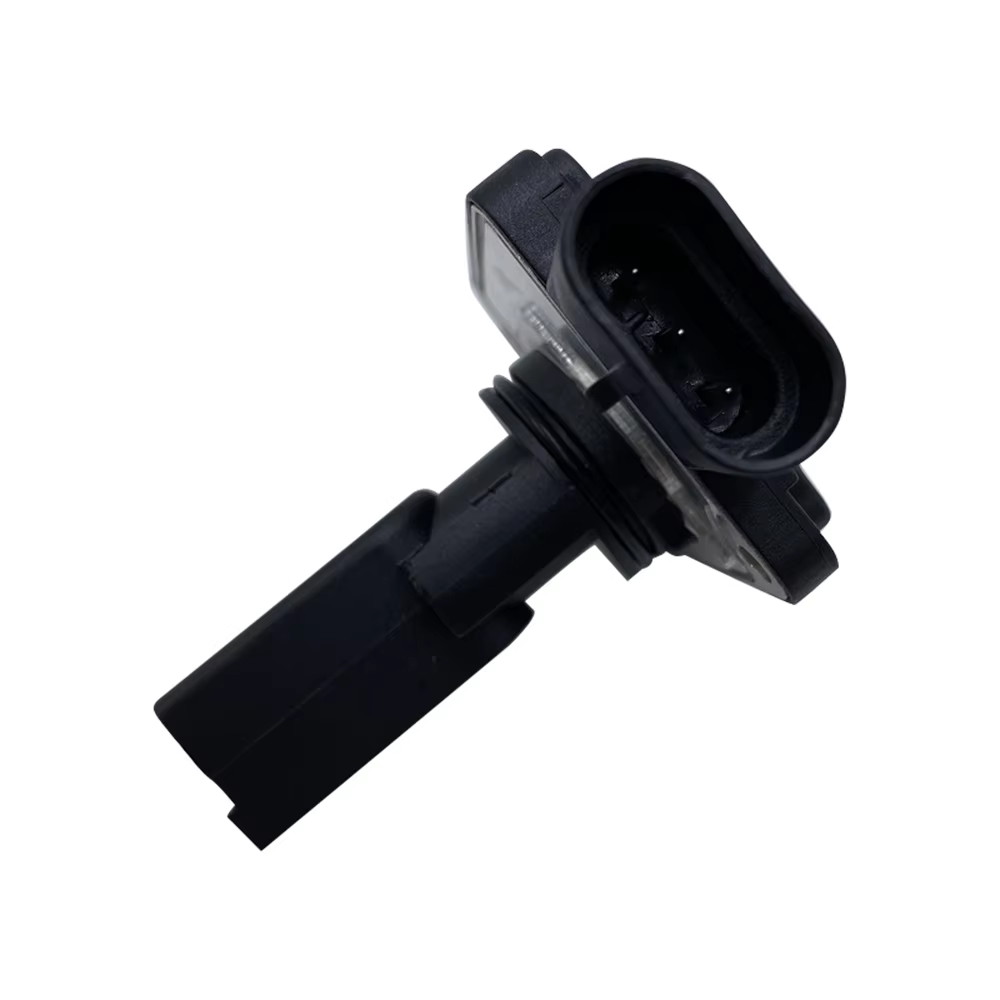
Technical & Regulatory Qualification: Non-Negotiables for an OEM Mass Air Flow Sensor Manufacturer
Selecting an automotive sensor partner begins with verifying strict industry certifications and a proven track record in high-volume production. These requirements are not optional—they determine whether a manufacturer can consistently deliver sensors that meet original equipment specifications.
ISO/TS 16949 Certification and Lot-to-Lot Consistency in Sensor Production
ISO/TS 16949 (now superseded by IATF 16949:2016) remains the globally recognized quality management standard for automotive suppliers. A manufacturer must hold active IATF 16949 certification to demonstrate alignment with rigorous requirements for process control, continuous improvement, and defect prevention. Beyond certification, lot-to-lot consistency is essential: automotive assembly lines require identical sensor performance across environmental and operational variables. This is achieved through statistical process control (SPC), tight tolerance management, and calibration traceability to national standards. For example, a CpK value above 1.33 is typically required to ensure minimal variation in output voltage signals across production runs. Each batch is accompanied by a certificate of conformance listing actual measurement data for key parameters—ensuring transparency and eliminating guesswork in downstream engine calibration. Without this discipline, OEMs face unpredictable assembly behavior, increased rework, warranty exposure, and field failures.
Proven Tier-1 Automotive Experience with MAF Sensor Validation and PPAP Compliance
Direct experience supplying Tier-1 automakers is a strong proxy for capability. Such partners have repeatedly navigated the Production Part Approval Process (PPAP), demonstrating mastery of documentation rigor, validation depth, and cross-functional coordination. For MAF sensors, PPAP submission includes design records, process flow diagrams, measurement system analysis (MSA), and full validation reports covering thermal shock, vibration endurance, and signal integrity over the full operating temperature range (–40°C to +125°C). A qualified manufacturer maintains internal test labs capable of replicating OEM-level validation protocols—and shares statistical evidence of process capability (e.g., Cpk, Ppk) upfront. This reduces risk, accelerates launch timelines, and reflects established error-proofing, full part traceability, and successful audits by multiple global OEMs.
Collaborative Capability: Beyond Sourcing to Co-Development with Your OEM Mass Air Flow Sensor Manufacturer
Early Engagement Models: Joint Specification Development Before Prototype Stage
Engaging a sensor manufacturer at the specification stage—not after design freeze—transforms the relationship from transactional to strategic. Jointly defining performance windows, functional tolerances, and validation boundaries enables early identification of manufacturability constraints, reducing prototype iterations and avoiding costly late-stage redesigns. Shared ownership of specifications builds trust and streamlines decision-making when engineering trade-offs arise—especially around signal fidelity, packaging constraints, or cost-performance balance.
Impact of Partnership Depth on NPI Cycle Time and Design-for-Manufacturability Outcomes
Partnership depth directly drives new product introduction (NPI) efficiency. Manufacturers embedded early support design-for-manufacturability (DFM) from concept—collaborating on tolerance stack-ups, signal noise thresholds, and environmental robustness before tooling begins. This integration minimizes back-and-forth, improves first-time yield, and shortens time-to-production. Industry benchmarks show collaborative OEM partnerships reduce NPI timelines by up to 30% while increasing first-pass yield by 15–20%. The differentiator lies in co-development bandwidth—not just production capacity—but dedicated engineering resources aligned to your program’s technical roadmap.
Supply Chain Resilience: Evaluating Scalability and Risk Mitigation with an OEM Mass Air Flow Sensor Manufacturer
Capacity Planning, Dual-Sourcing Readiness, and Backorder Response Protocols
Resilience starts with scalable, quality-controlled capacity. Evaluate how the manufacturer responds to demand surges: do they maintain flexible production lines capable of ramping output within weeks? Do they invest proactively in tooling, floor space, or workforce training—not just reactively? Equally critical is dual-sourcing readiness: pre-qualified backup suppliers for sensing elements, housings, and ASICs prevent single-point failure. Leading manufacturers also implement structured backorder response protocols—including defined escalation paths, safety stock buffers for critical SKUs, and real-time shortage dashboards. They communicate transparently, offering validated alternate part numbers or temporary substitutes to keep your line running. Without these systems, even minor disruptions risk cascading downtime—eroding customer trust and margin.
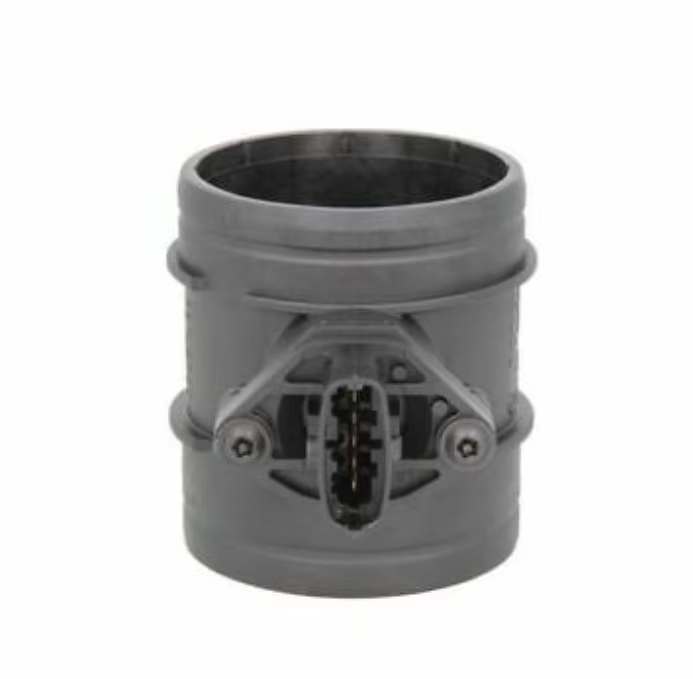
Quality Execution: From Design Intent to First-Time Yield in MAF Sensor Manufacturing
When selecting an OEM mass air flow sensor manufacturer, first-pass yield (FPY) is the most telling indicator of quality execution—the percentage of units meeting all specifications without rework or repair. High FPY reflects disciplined translation of design intent into repeatable, controlled manufacturing.
Translating Critical Features—Tolerance Stack-Ups, Signal Noise Thresholds, and Environmental Robustness
For MAF sensors, three features dominate quality outcomes:
- Tolerance stack-ups: Tight geometric and dimensional control prevents mechanical misalignment that causes signal drift.
- Signal noise thresholds: Precise calibration and shielding minimize electrical interference, ensuring accurate airflow readings across RPM ranges.
- Environmental robustness: Validation against condensation, oil mist, thermal cycling, and particulate ingress ensures long-term reliability in harsh under-hood environments.
Manufacturers achieving >95% FPY on these critical-to-quality (CTQ) characteristics demonstrate deep process understanding—not just compliance. That discipline lowers scrap, reduces cost of quality, and strengthens delivery predictability—making it a non-negotiable benchmark in supplier selection.
Table of Contents
- Technical & Regulatory Qualification: Non-Negotiables for an OEM Mass Air Flow Sensor Manufacturer
- Collaborative Capability: Beyond Sourcing to Co-Development with Your OEM Mass Air Flow Sensor Manufacturer
- Supply Chain Resilience: Evaluating Scalability and Risk Mitigation with an OEM Mass Air Flow Sensor Manufacturer
- Quality Execution: From Design Intent to First-Time Yield in MAF Sensor Manufacturing