 EN
EN

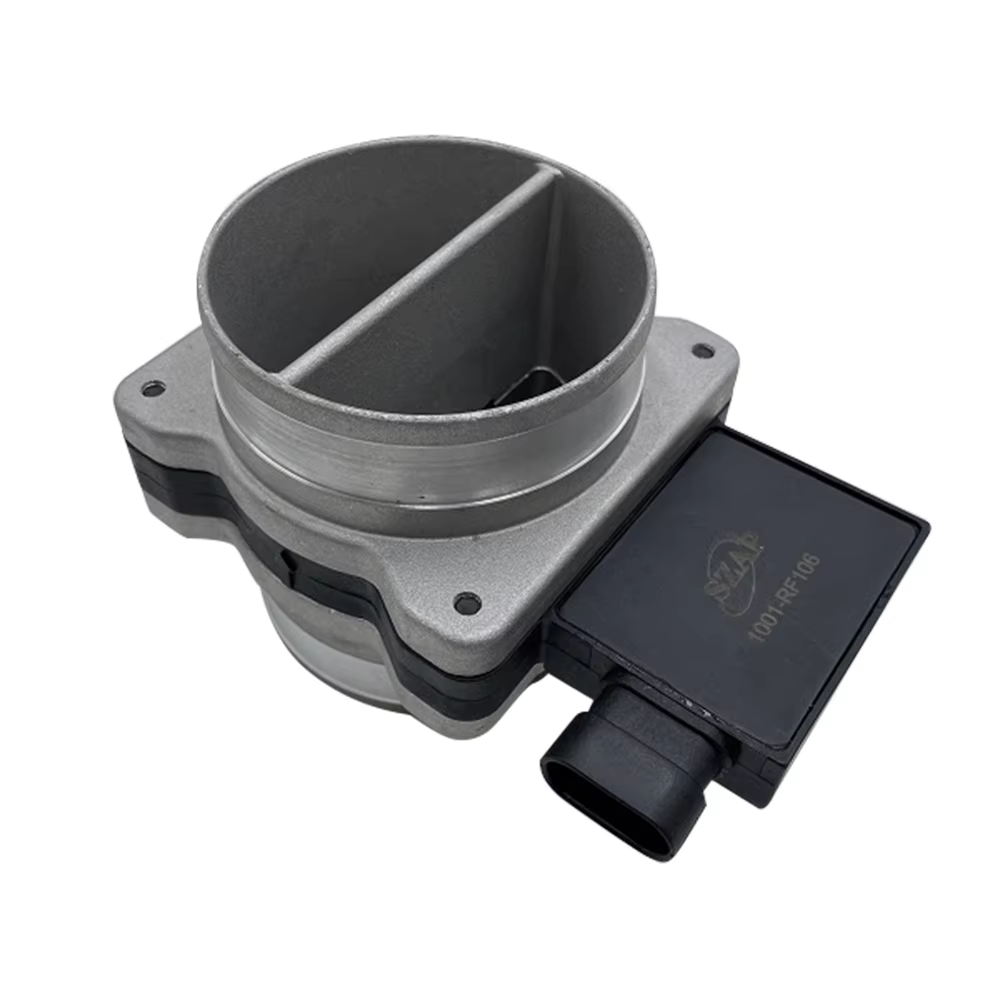
Why Mass Air Flow Sensor Manufacturer Reputation Directly Impacts Engine Performance and Longevity
OEM-Approved Manufacturing Standards and Their Role in Signal Accuracy and Thermal Stability
A mass air flow sensor manufacturer’s adherence to OEM-approved standards is foundational to signal accuracy and thermal stability. Precision in hot-wire placement, controlled platinum or silicon carbide coating thickness, and hermetically sealed housing ensure consistent voltage output across temperature swings and airflow ranges. This fidelity allows the engine control module (ECM) to maintain optimal air-fuel ratios—maximizing power, fuel efficiency, and emissions compliance. Sensors built to looser tolerances, by contrast, suffer thermal drift, prompting the ECM to misread intake volume and deliver lean or rich mixtures. The consequences include sluggish acceleration, elevated hydrocarbon and NOx emissions, and increased catalytic converter stress. Manufacturers that deploy automated calibration rigs and mandatory thermal cycling tests—validating each unit against OEM thresholds before shipment—not only safeguard real-world performance but also extend service life, reducing warranty exposure and replacement frequency for fleets and repair networks.
Contamination Resistance as a Proxy for Build Quality: Interpreting the 18,000–25,000-Mile Failure Threshold
Contamination resistance serves as a highly revealing indicator of overall build quality. A recurring failure window of 18,000–25,000 miles among aftermarket sensors signals inadequate protection against oil vapor, dust, and road debris—often due to missing hydrophobic coatings, substandard sintered metal screens, or unsealed electronics. When contamination degrades the sensing element, the ECM receives distorted airflow data, triggering compensatory fuel trims that cause rough idle, hesitation, and up to a 15% drop in fuel economy. Premium manufacturers validate contamination resistance under realistic underhood conditions—including oil mist exposure and cyclic thermal loading—making this benchmark a reliable proxy for broader manufacturing rigor. Selecting a supplier that publishes such test results helps avoid hidden lifecycle costs tied to premature replacement and drivability complaints.
SAE J1930 and IATF 16949 (formerly ISO/TS 16949) Compliance: Non-Negotiable Validation for Production Integrity
SAE J1930 compliance and IATF 16949 certification are non-negotiable markers of technical credibility. SAE J1930 ensures diagnostic communication protocols align with heavy-duty and light-duty vehicle standards—so sensor output is interpreted correctly by the ECM without protocol mismatch or data loss. IATF 16949, the automotive industry’s gold-standard quality management system, mandates rigorous process control, full component traceability, statistical process monitoring, and documented continuous improvement. These requirements directly govern critical production steps: hot-wire coating uniformity, PCB shielding integrity, and long-term calibration stability. Without both certifications, manufacturers lack verified controls over defect drivers like micro-cracking in platinum layers or EMI-induced signal noise—risks that translate into inconsistent accuracy and early field failures. For OEM-tier supply chains, these credentials aren’t optional; they’re the baseline for production integrity.
Leading Tier-1 Automotive Suppliers as Reference: What Their Calibration Rigor Reveals
Tier-1 suppliers set the definitive benchmark for calibration discipline—and their practices reveal what true technical credibility looks like. Their mass air flow sensors undergo hundreds of hours of thermal cycling (-40°C to +125°C), multi-axis vibration testing, and precision flow-bench validation across dynamic airflow profiles. Each unit is individually calibrated at multiple points (e.g., 0–100 g/s in 10 g/s increments), with coefficients stored on-chip alongside a unique serial number for full traceability. This level of rigor delivers ±2% measurement accuracy over the sensor’s entire service life—even when exposed to oil-laden air, extreme heat soak, or high-frequency engine vibrations. When evaluating a manufacturer, request documentation showing alignment with these Tier-1 practices: not just pass/fail test reports, but evidence of multi-point calibration, environmental stress validation, and chip-level data retention. That transparency separates precision-engineered components from commodity-grade alternatives.
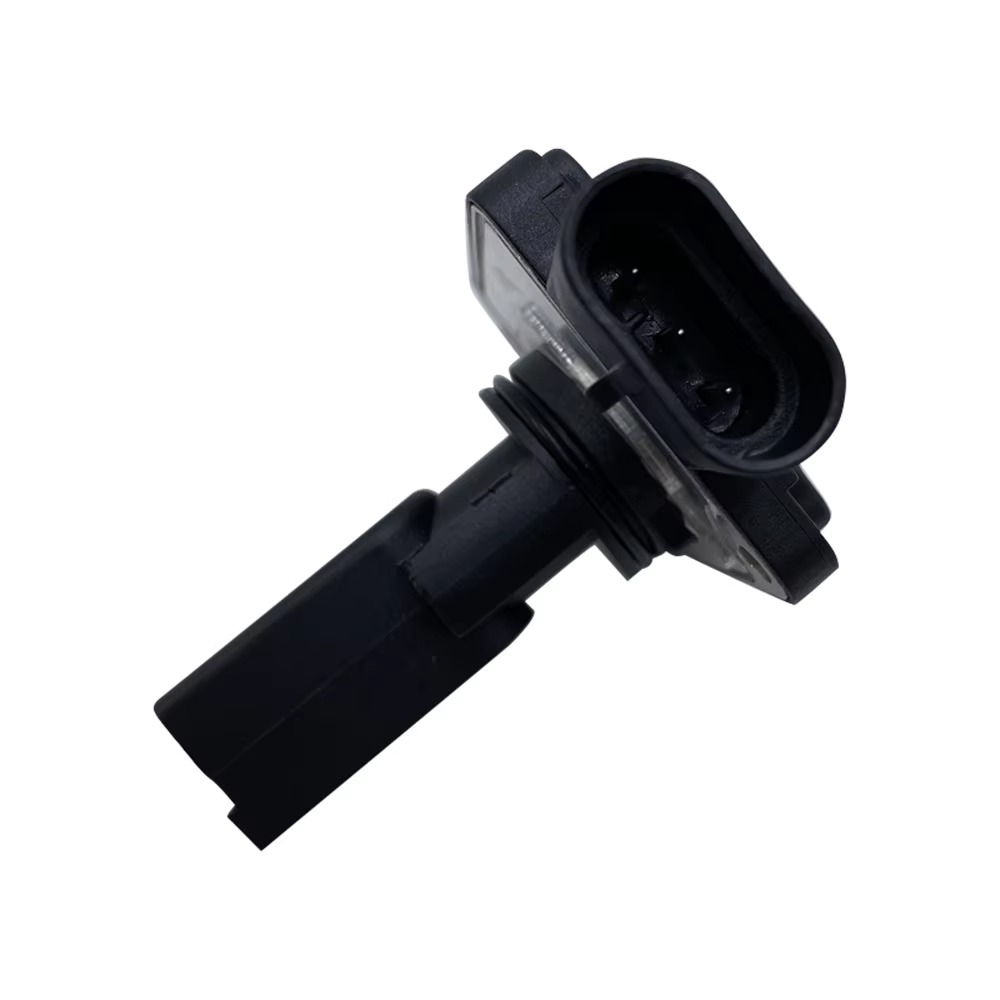
Housing Material, Hot-Wire Coating Consistency, and PCB Shielding — How to Spot Premium Manufacturing
Physical construction offers immediate, observable clues to a manufacturer’s commitment to durability and accuracy. First, examine the housing: premium sensors use reinforced thermoplastics (e.g., PBT-GF30) or die-cast aluminum alloys engineered to resist warping and dimensional shift after repeated underhood thermal cycling. Second, inspect the hot-wire element: consistent, pinhole-free coatings—whether platinum, silicon carbide, or doped ceramic—ensure stable resistance curves and resistance to oxidation and oil fouling. Third, verify PCB shielding: a grounded metal can, conductive epoxy barrier, or certified conformal coating (e.g., IPC-CC-830B Class 3) is essential to block electromagnetic interference from ignition systems, alternators, and infotainment modules. Together, these three features form a triad of tangible quality signals—each directly influencing long-term measurement fidelity and mechanical resilience.
Vehicle-Specific Compatibility: Why VIN-Level Validation Is Essential for Mass Air Flow Sensor Manufacturer Selection
Vehicle-specific compatibility is not negotiable—even minor variances in connector pinouts, calibration curve mapping, or intake duct geometry can compromise performance. Visual similarity or generic part-number matching leads to fitment and function failures; over 95% of reported compatibility issues stem from skipping VIN-level verification. Using the Vehicle Identification Number to cross-reference OE databases ensures exact alignment with the vehicle’s engine management logic, airflow model, and physical mounting interface. A trustworthy manufacturer supports this process with VIN-lookup tools, application-specific part numbering, and OE-matched calibration data—not just interchangeable housings. This commitment to precision eliminates guesswork, prevents check-engine lights triggered by implausible airflow readings, and avoids drivability issues like surge, stalling, or failed emissions tests.
Table of Contents
-
Why Mass Air Flow Sensor Manufacturer Reputation Directly Impacts Engine Performance and Longevity
- OEM-Approved Manufacturing Standards and Their Role in Signal Accuracy and Thermal Stability
- Contamination Resistance as a Proxy for Build Quality: Interpreting the 18,000–25,000-Mile Failure Threshold
- SAE J1930 and IATF 16949 (formerly ISO/TS 16949) Compliance: Non-Negotiable Validation for Production Integrity
- Leading Tier-1 Automotive Suppliers as Reference: What Their Calibration Rigor Reveals
- Housing Material, Hot-Wire Coating Consistency, and PCB Shielding — How to Spot Premium Manufacturing
- Vehicle-Specific Compatibility: Why VIN-Level Validation Is Essential for Mass Air Flow Sensor Manufacturer Selection