 EN
EN

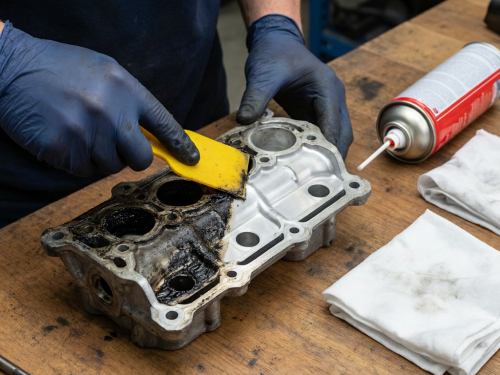
Valve cover gasket reuse is generally not recommended, and in most OEM service protocols it is explicitly prohibited. Once a rubber or silicone gasket has been compressed at operating temperature for even a few thousand kilometers, it develops permanent compression set — a measurable loss of thickness and elasticity — reducing its ability to seal effectively upon reinstallation. The economics almost always favor a new gasket: on a job that already involves pulling the cover, the incremental cost of a fresh gasket is trivial compared to the labor of doing the job twice.
A useful decision framework: soft, flexible, undamaged gaskets from a low-mileage vehicle (under 20,000 km) may be reusable short-term as an emergency measure but are not ideal. Compression-flattened gaskets — anything showing more than 15% thickness loss versus a new reference — will leak. Hardened or cracked gaskets have already failed and must be replaced. RTV or liquid gaskets are single-use by definition and must be scraped off and reapplied. Reusable molded rubber (used on some Honda K-series and Toyota 1MZ applications) may work if the OE service procedure explicitly allows it, but even then, only if the gasket returns to full free-state thickness after removal.
Evaluation steps, in order: remove the gasket carefully without tearing, preferably by hand rather than with a pick that could nick the cover; check the cross-section for permanent flattening using calipers against the manufacturer's free-state thickness spec; bend the gasket 90 degrees between your fingers and confirm it returns to shape without kinking; inspect for cracks, glazing, or hardening (a fingernail should still leave a visible mark on a serviceable gasket); and compare overall thickness at multiple points around the perimeter — uneven wear tells you the cover was over-torqued on one side and the gasket cannot be trusted.
A case from our technical support inbox: a Ford Focus 2.0L owner reused a molded rubber valve cover gasket to save 20 USD on a DIY repair. The car ran clean for six weeks, then developed an oil leak that dripped onto the exhaust manifold and produced a burning smell that alarmed the driver enough to call in. When the cover came off again, the gasket had permanently flattened along the front edge where the two crushed grommets had bottomed the cover onto the head. Total labor to repeat the job: about the same as the original. Total savings from reusing the gasket: negative 20 USD once the new gasket was finally purchased.
Comparison in prose across common gasket types: cork gaskets — found on many older GM, Chrysler, and Mitsubishi applications — are absolutely single-use, because cork crushes irreversibly and the sealant impregnation dries out on the first heat cycle. Cork-rubber composite gaskets are also single-use. Molded silicone rubber gaskets — the modern standard on most Honda, Toyota, VW, and Hyundai/Kia applications — are technically reusable within tight limits (unbent, uncrushed, under two years of service), but every OEM service manual we cross-reference recommends replacement. Metal-carrier rubber gaskets are single-use because the rubber bead deforms permanently under initial clamp load.
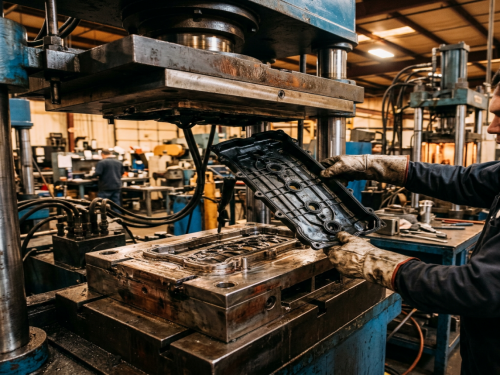
Nansen Auto manufactures 150+ valve cover models with precision-molded gasket channels designed for specific compression ratios across Audi/VW, Honda, Ford, GM, and other OEM platforms. The channel depth is dimensioned to compress the OE gasket to its optimal sealing height when the specified bolt torque is applied — meaning that using a non-OE gasket, or reusing an old one that has lost thickness, will disturb this designed compression ratio and produce a leak even at correct torque.
Common pitfalls and misconceptions: believing a gasket that "looks fine" is fine — visual inspection alone misses compression set; using RTV on top of a reused rubber gasket to "seal any weak spots" — this creates channels for oil to migrate and typically leaks worse than the reused gasket alone; and mixing OEM gaskets with aftermarket covers or vice versa — the compression channel geometry may not match.
FAQ:
FAQ: Q: How many hours does gasket replacement add to a valve cover service? A: Near zero — since the cover is already removed, gasket swap adds only minutes of hands-on time. The main cost is the gasket itself, which is why the reuse debate almost always tilts toward replacement on the labor economics alone.
FAQ: Q: Do cork and rubber gaskets have different reuse rules? A: Yes. Cork is never reusable — the material crushes permanently and the sealant binder dries out on first heat cycle. Molded rubber has limited reuse potential if undamaged, unbent, and within its free-state thickness range, but even then most OEMs specify replacement.
FAQ: Q: Can I reuse a gasket if I add RTV around the perimeter? A: No. RTV cannot compensate for compression set, and it often creates new leak paths by wicking oil under the bead. If you need RTV, replace the gasket first.
FAQ: Q: How does Nansen Auto guarantee gasket seal compatibility? A: Our valve cover gasket channels are designed against the OEM print, and every new model release is validated with an air-tightness test at 0.3 bar for 30 seconds with zero pressure drop tolerance. This test is part of our IATF 16949 control plan and is repeated on production sampling — the same protocol behind our valve cover invention patent — before parts ship to any of our 80+ markets.