EN
EN

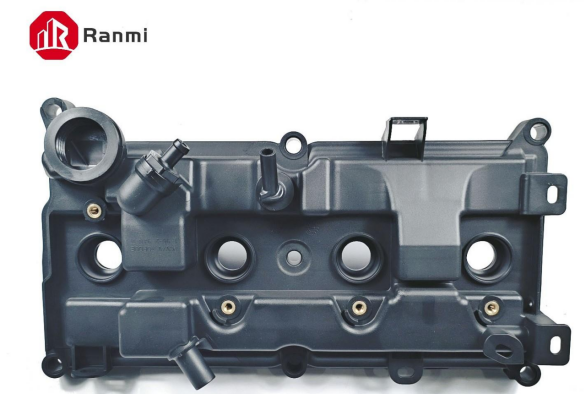
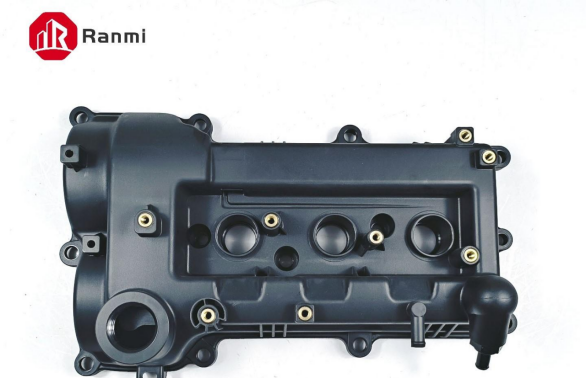
Quick Answer: A valve cover is the rigid plastic or aluminum part that bolts to the cylinder head; a valve cover gasket is the flexible rubber sealing strip between the cover and the head. A "complete valve cover kit" typically includes the cover, gasket, copper inserts (compression limiters at each bolt), oil seal (where applicable), and bolts. When sourcing aftermarket parts, importers must explicitly specify which components are included.
Component Breakdown
|
Component |
Material |
Function |
Typical Failure Mode |
|
Main body (valve cover) |
Glass-filled nylon or aluminum |
Structural enclosure |
Cracking, warping |
|
Sealing gasket |
NBR / FKM rubber |
Oil-tight seal at head joint |
Compression set, hardening |
|
Copper bushings (inner sleeve) |
Copper / brass |
Bolt compression limiter |
Corrosion (rare) |
|
Oil seal |
NBR rubber |
Camshaft / PCV port seal |
Hardening, leak |
|
Inner plate / baffle |
Stamped steel or molded plastic |
Oil separator for PCV |
Delamination |
|
Bolts |
Steel, hex or Torx |
Fastening |
Stripping (over-torque) |
What Counts as "Complete"?
OEM and reputable aftermarket suppliers like Ranmi/Nansen ship valve covers in three SKU configurations:
Configuration A — Cover Only Just the molded body. Customer reuses gasket and hardware. Lowest cost, highest risk of leak callback.
Configuration B — Cover + Gasket Most common B2B SKU. Includes the body and a one-time-use gasket. Customer reuses bolts and copper inserts.
Configuration C — Complete Service Kit Includes cover, gasket, copper inserts, oil seal, all required bolts, and any spark-plug-tube seals. Highest value, lowest comeback rate. Recommended for European and North American distributor markets.
The Ranmi product structure on page 03 of the corporate brochure shows the typical complete-kit composition: Main Body + Sealing Gasket + Copper Nut + Mental Sleeve + Iron Pipe + Oil Seal + Inner Plate + Bolt.
RFQ Best Practices
When importing aftermarket valve covers, your RFQ should explicitly answer six questions:
- Which OE numbers are being supplied? (List all supersession variants.)
- What configuration: A (cover only), B (cover + gasket), or C (complete kit)?
- What gasket material: NBR (standard) or FKM (high-temp/turbo)?
- Are bolts included? Hex or Torx? Pre-treated thread locker?
- Carton labeling: brand, OE number, country of origin, batch code?
- Air-tightness test certificate per shipment?
Common Misunderstandings
"The gasket comes with the cover, right?" Not always. Distributor confusion is the second-largest cause of customer returns after wrong fitment. Always confirm in the PI (Proforma Invoice).
"I'll source the gasket separately and save money." Mismatched gasket dimensions cause oil leaks. The Ranmi mold tooling specifies gasket groove geometry to 0.1 mm tolerance. Third-party gaskets rarely match exactly.
"All gasket rubber is the same." NBR (Nitrile) is rated to 120°C continuous. FKM (Viton®) is rated to 200°C continuous. For turbocharged engines, FKM is mandatory.
FAQ
Q1: Can I order valve cover gaskets separately from Ranmi/Nansen? Yes. Common gasket-only SKUs are available for high-runners (Toyota Camry 2.4, Nissan Altima 2.5, Hyundai Sonata 2.4). Custom-molded gaskets require MOQ 1,000 pcs.
Q2: What MOQ applies to a complete service kit? For listed catalog SKUs, MOQ is typically the standard packing quantity (e.g., 8 or 10 per carton). For custom kit configurations, MOQ is one full container or 500 sets.
Q3: How do I verify the gasket material? Request the supplier's material data sheet (MDS) and a Shore A hardness reading. Standard NBR is 70 Shore A; FKM is 75–80 Shore A and visually green or brown rather than black.