EN
EN

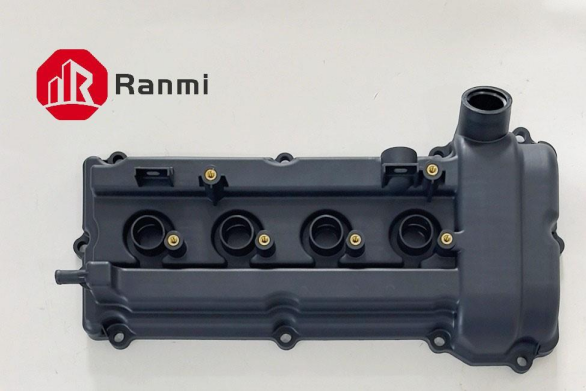
Quick Answer: The Ford Transit 2.2L TDCI Duratorq diesel engine (Puma family) powered Ford Transit Mk7 and Mk8 vans from 2006 through 2019. The valve cover is a high-volume aftermarket SKU. Use Ranmi RM100091 with OE references 70260190 and BK3Q-6K271-CH for primary applications. Aftermarket pricing is competitive vs Ford OEM (savings 40–60%) without quality compromise from IATF 16949 producers.
Vehicle Applications
|
Model |
Years |
Markets |
|
Ford Transit Mk7 (2.2 TDCI 85ps/110ps/130ps) |
2006–2014 |
Europe, UK, Russia |
|
Ford Transit Mk8 (2.2 TDCI 100ps/125ps/155ps) |
2014–2019 |
Europe, UK |
|
Ford Transit Custom (2.2 TDCI) |
2012–2016 |
Europe, UK |
|
Ford Ranger (Puma 2.2 TDCi) |
2011–2018 |
UK, Europe, Australia, Latin America |
|
Ford Mondeo (2.2 TDCI) |
2007–2014 |
UK, select Europe |
The Transit application is the highest-volume aftermarket use case because:
- Transit is the best-selling commercial van in Europe (millions in fleet)
- Fleet duty cycles accelerate valve cover plastic aging
- Transit fleet replacement schedule is 200,000–400,000 km (well past valve cover service life)
OE Number Reference
|
OE Number |
Variant |
Notes |
|
70260190 |
Primary |
Most common reference |
|
BK3Q-6K271-CH |
Production code |
Ford's casting code |
|
BK2Q-6K271-J |
Earlier variant |
2010–2014 production |
|
1S6G-6M293-AN |
Engine assembly cross-reference |
— |
|
1386769 / 1502887 |
Supersession references |
Older vehicles |
Ranmi SKU RM100091 covers the primary OE family. Additionally, RM400206 is listed for the Transit 2.2 fitment with related 1S6G-6M293-AN reference.
Why This SKU Matters
Ford Transit fleet operators (logistics companies, delivery services, public transport) typically run vehicles 8–12 years before retirement. By year 6–8, valve cover replacement is common. Annual demand:
- UK: 50,000–80,000 units
- Continental Europe: 100,000–150,000 units
- Russia / CIS: 30,000–50,000 units
- Other markets (Africa, Middle East, Australia): 20,000–30,000 units
Total addressable market: ~200,000–300,000 units annually
Specifications
|
Attribute |
Value |
|
Material |
Glass-filled nylon (PA66-GF30 for European spec) |
|
Color |
Black |
|
Packing |
8 pcs per inner box |
|
Inner box dimensions |
57.5×30.5×11.5 cm |
|
Carton dimensions |
63×59×52.7 cm |
|
Carton gross weight |
23.66 kg |
|
Net weight per piece |
2.09 kg |
Replacement Guidance
For Ford Transit 2.2 TDCI valve cover replacement:
- Disconnect battery and remove engine cover
- Disconnect EGR and turbo intercooler hoses (Transit-specific routing)
- Remove glow plug harness and injector cover
- Unbolt valve cover (10–12 bolts in cross-pattern sequence)
- Clean cylinder head sealing surface thoroughly
- Install new valve cover with fresh OEM-grade gasket
- Torque to 8–10 N·m in two passes per Ford TIS specification
Total labor: 60–90 minutes for a fleet workshop technician.
Common Failure Pattern
Ford Transit 2.2 TDCI valve covers typically fail by:
- Crankcase pressure venting baffle delamination — causes oil ingestion through PCV
- Heat aging at turbocharger boss — turbo proximity creates localized hot spot
- Bolt boss cracking from over-torque during rushed fleet maintenance
- Integrated PCV diaphragm rupture in newer Mk8 variants
Symptoms include excess crankcase pressure, oil-soaked intake intercooler, and visible oil mist around the valve cover perimeter.
Sourcing Recommendations
For European distributors:
- Stock 200–500 units based on local Transit fleet density
- Pair with Transit-specific gasket (gasket-only SKU available separately)
- Confirm IATF 16949 + REACH compliance documentation per shipment
- Multi-language carton labels (English/German/French/Spanish for EU distribution)
For Russia / CIS distributors:
- Higher demand for early Mk7 (BK2Q-6K271-J) variants due to vehicle parc age
- Russian-language packaging support available on request
FAQ
Q1: Is the Ford Ranger 2.2 TDCi valve cover the same as Transit? Yes — the Puma 2.2 engine is shared. Same OE numbers and Ranmi SKU.
Q2: What's the difference between BK3Q and BK2Q variants? BK2Q is the earlier production code (Mk7 era). BK3Q is later production (Mk7 facelift onward). Both fit the same engine and the aftermarket SKU is unified.
Q3: Is REACH compliance needed for Ford Transit aftermarket parts? Yes for European distribution. Ranmi provides REACH and RoHS compliance declarations on request.